In the fast-paced world of foreign exchange, the search for the “Holy Grail” of trading never ends. However, as we navigate the financial landscape of 2026, seasoned traders have realized that success isn’t about finding a magic indicator. It’s about mastering a repeatable, disciplined approach. Whether you are a beginner or a professional, the following […]
In the fast-paced world of foreign exchange, the search for the “Holy Grail” of trading never ends. However, as we navigate the financial landscape of 2026, seasoned traders have realized that success isn’t about finding a magic indicator. It’s about mastering a repeatable, disciplined approach.
Whether you are a beginner or a professional, the following Top 5 Forex trading strategies have stood the test of time and volatility. These systems “actually work” because they are rooted in market psychology, institutional flow, and objective price action.
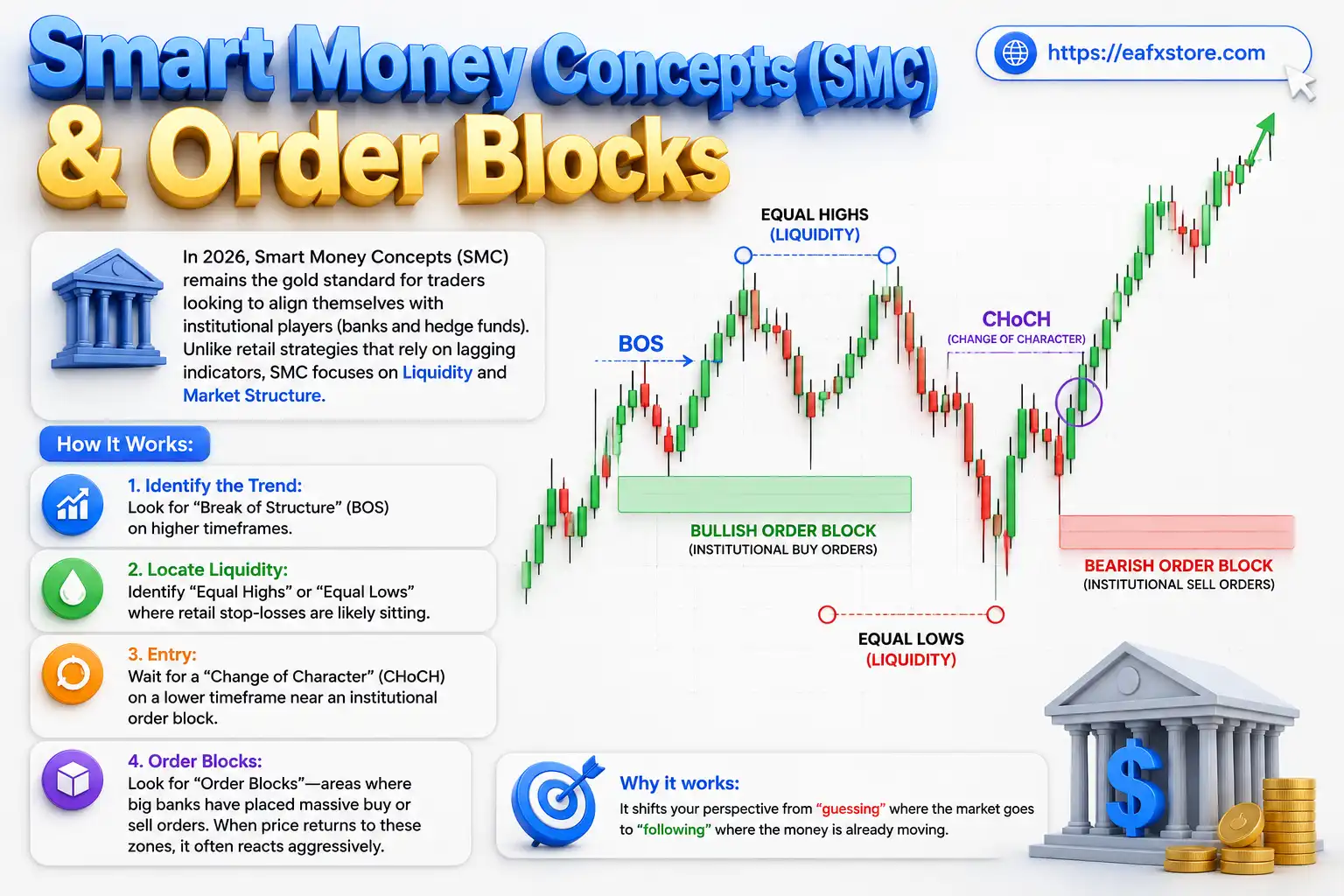
1. Smart Money Concepts (SMC) & Order Blocks
In 2026, Smart Money Concepts (SMC) remains the gold standard for traders looking to align themselves with institutional players (banks and hedge funds). Unlike retail strategies that rely on lagging indicators, SMC focuses on Liquidity and Market Structure.
How It Works:
SMC traders look for “Order Blocks”—areas where big banks have placed massive buy or sell orders. When price returns to these zones, it often reacts aggressively.
Identify the Trend: Look for “Break of Structure” (BOS) on higher timeframes.
Locate Liquidity: Identify “Equal Highs” or “Equal Lows” where retail stop-losses are likely sitting.
Entry: Wait for a “Change of Character” (CHoCH) on a lower timeframe near an institutional order block.
Why it works: It shifts your perspective from “guessing” where the market goes to “following” where the money is already moving.
SMC and Order Blocks
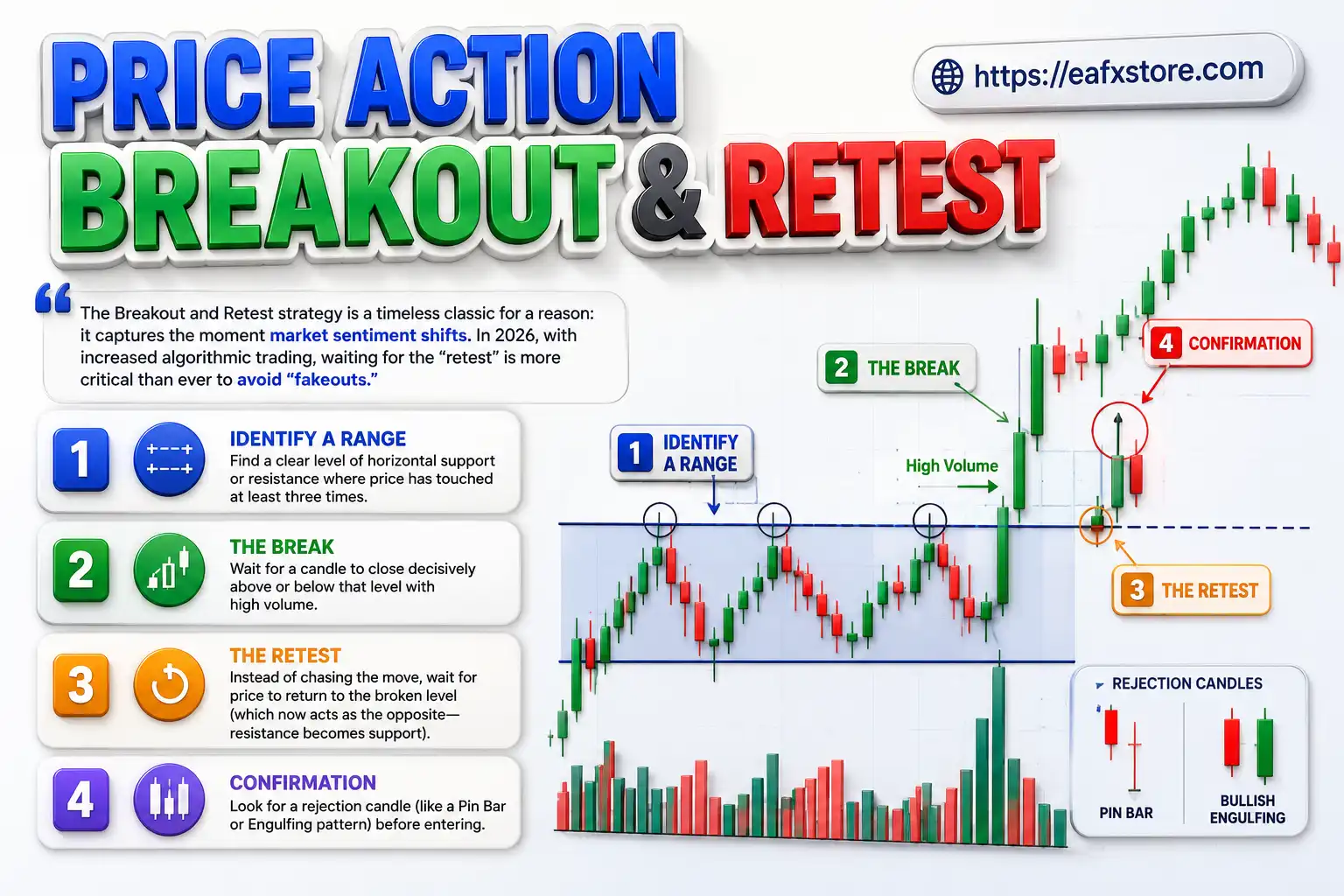
2. The Price Action Breakout & Retest
The Breakout and Retest strategy is a timeless classic for a reason: it captures the moment market sentiment shifts. In 2026, with increased algorithmic trading, waiting for the “retest” is more critical than ever to avoid “fakeouts.”
The Execution:
Identify a Range: Find a clear level of horizontal support or resistance where price has touched at least three times.
The Break: Wait for a candle to close decisively above or below that level with high volume.
The Retest: Instead of chasing the move, wait for price to return to the broken level (which now acts as the opposite—resistance becomes support).
Confirmation: Look for a rejection candle (like a Pin Bar or Engulfing pattern) before entering.
Price Action Breakout and Retest
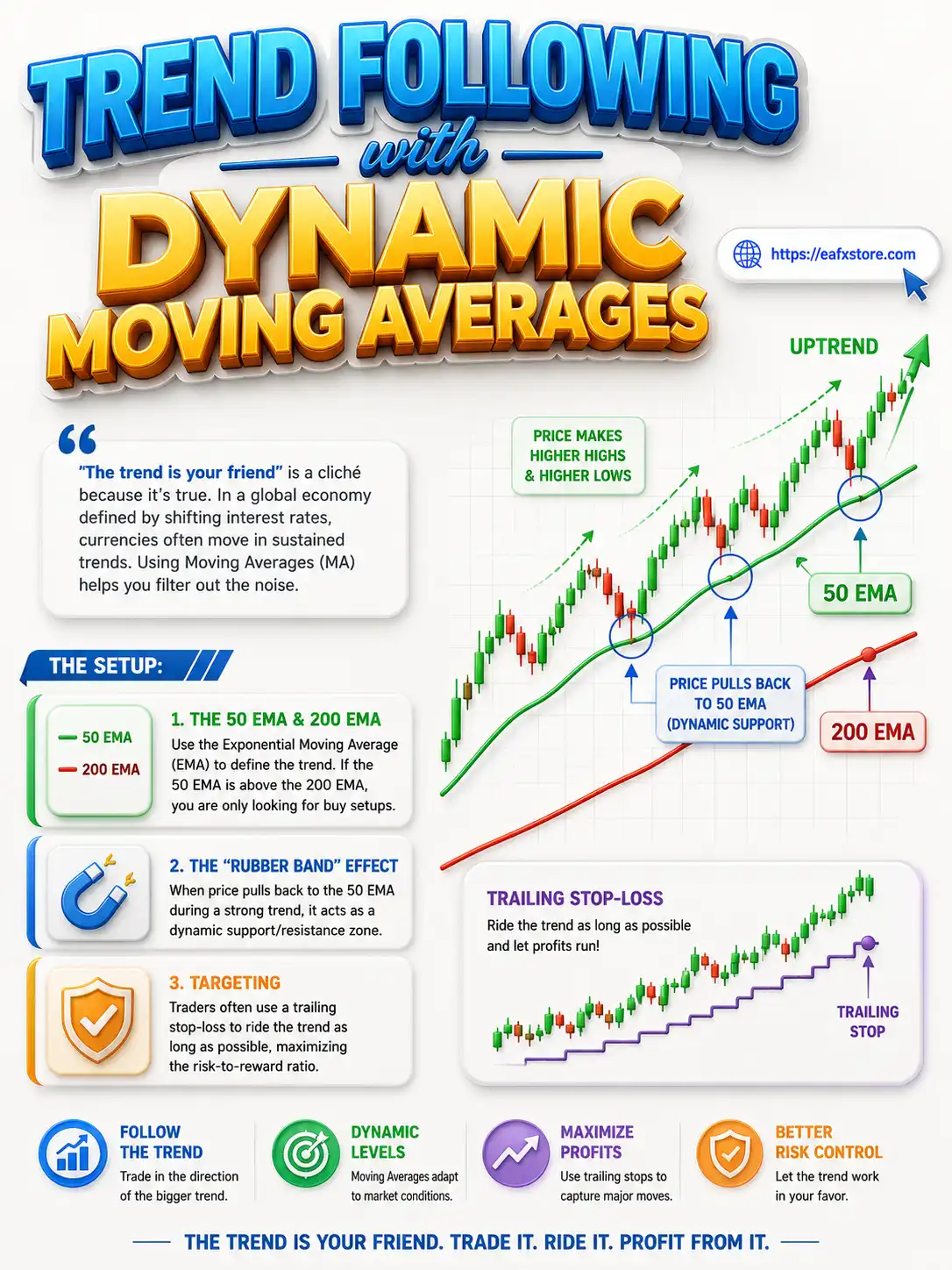
3. Trend Following with Dynamic Moving Averages
“The trend is your friend” is a cliché because it’s true. In a global economy defined by shifting interest rates, currencies often move in sustained trends. Using Moving Averages (MA) helps you filter out the noise.
The Setup:
The 50 EMA & 200 EMA: Use the Exponential Moving Average (EMA) to define the trend. If the 50 EMA is above the 200 EMA, you are only looking for buy setups.
The “Rubber Band” Effect: When price pulls back to the 50 EMA during a strong trend, it acts as a dynamic support/resistance zone.
Targeting: Traders often use a trailing stop-loss to ride the trend as long as possible, maximizing the risk-to-reward ratio.
Trend Following with Dynamic Moving Averages
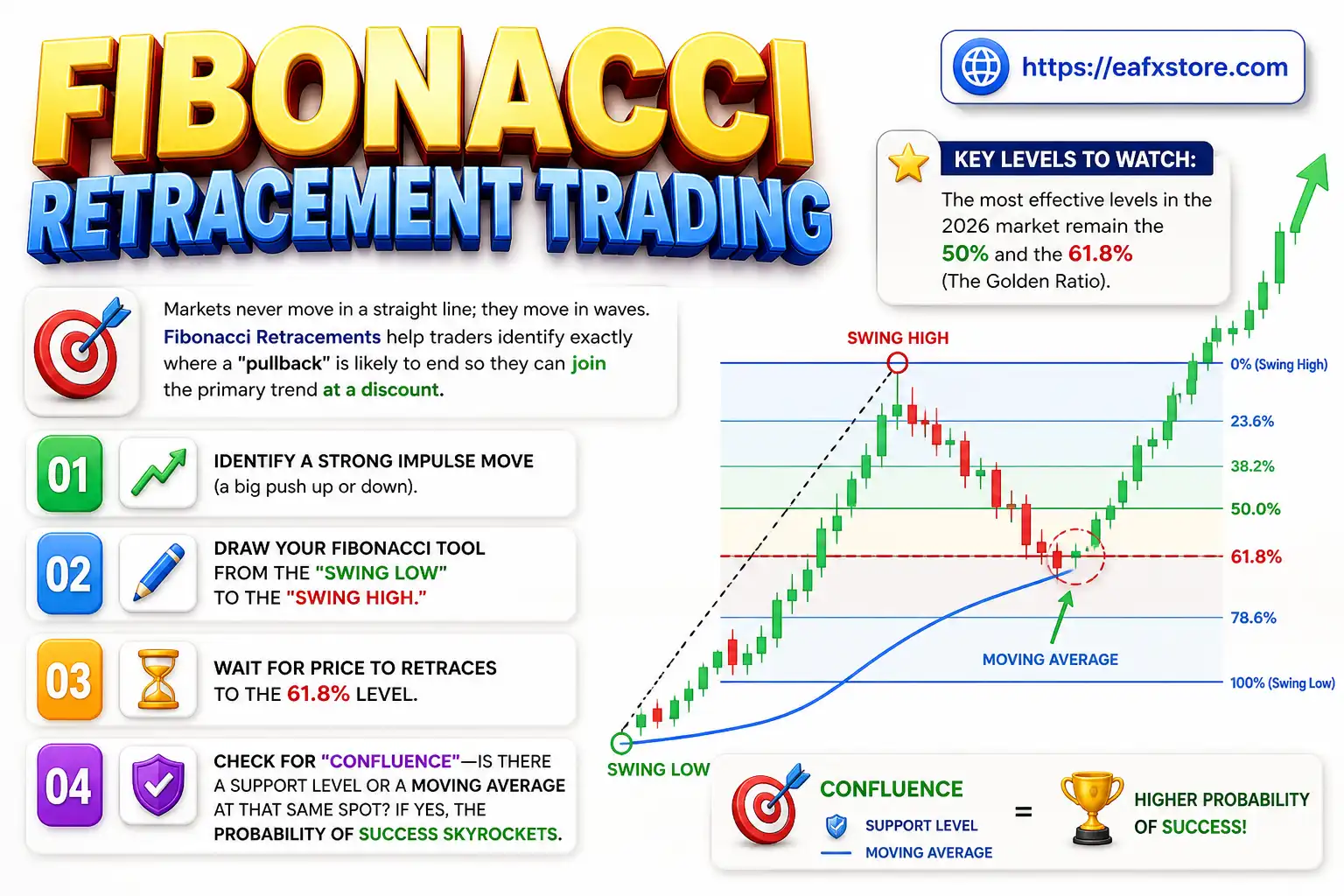
4. Fibonacci Retracement Trading
Markets never move in a straight line; they move in waves. Fibonacci Retracements help traders identify exactly where a “pullback” is likely to end so they can join the primary trend at a discount.
Key Levels to Watch:
The most effective levels in the 2026 market remain the 50% and the 61.8% (The Golden Ratio).
Step 1: Identify a strong impulse move (a big push up or down).
Step 2: Draw your Fibonacci tool from the “Swing Low” to the “Swing High.”
Step 3: Wait for price to retraces to the 61.8% level.
Step 4: Check for “Confluence”—is there a support level or a Moving Average at that same spot? If yes, the probability of success skyrockets.
Fibonacci Retracement Trading
5. The Carry Trade Strategy
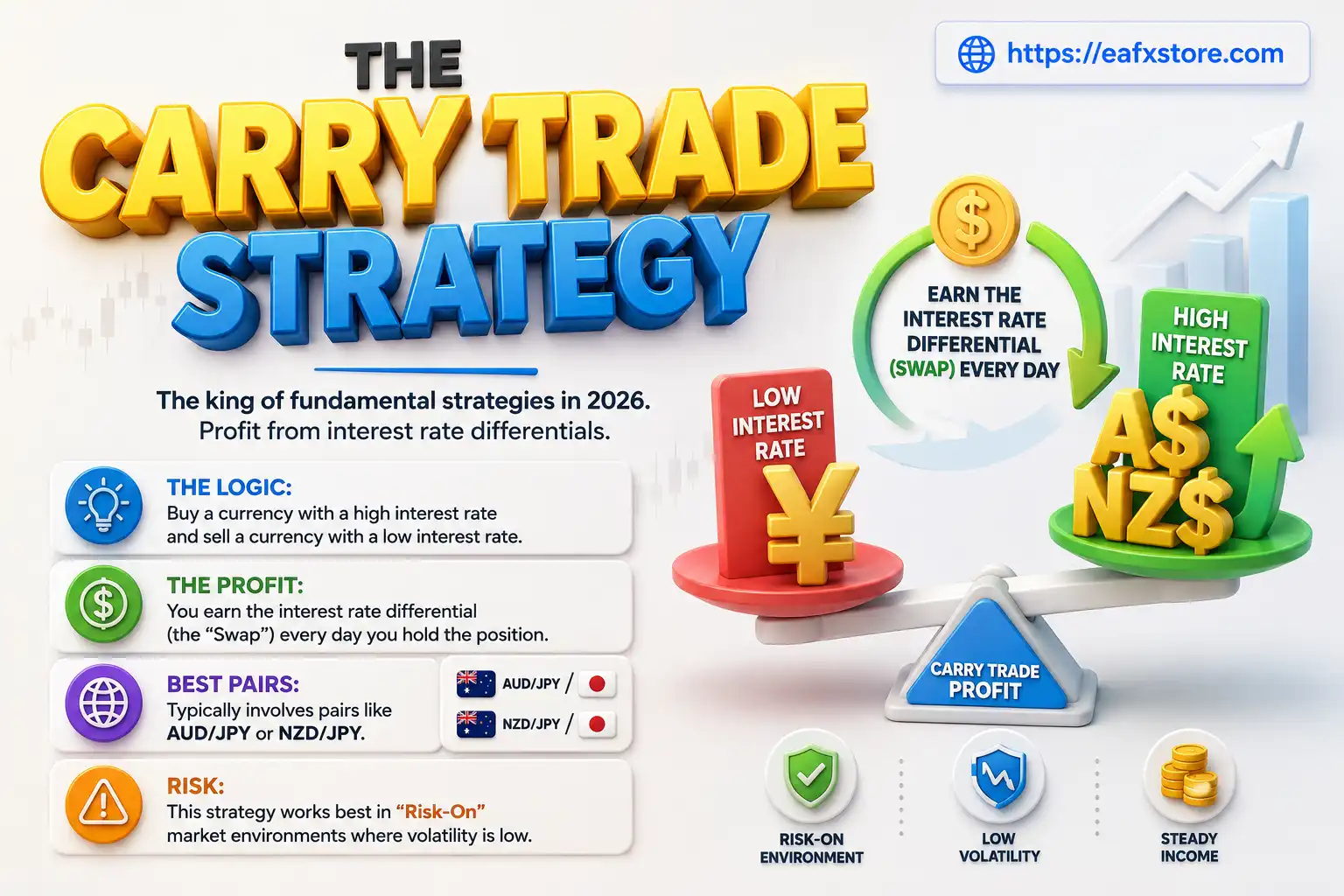
While the first four strategies are technical, the Carry Trade is the king of fundamental strategies. This is particularly popular in 2026 as central banks globally have diverged in their interest rate policies.
The Logic:
A carry trade involves buying a currency with a high interest rate and selling a currency with a low interest rate.
The Profit: You earn the interest rate differential (the “Swap”) every day you hold the position.
Best Pairs: Typically involves pairs like AUD/JPY or NZD/JPY.
Risk: This strategy works best in “Risk-On” market environments where volatility is low.
The Carry Trade Strategy
Comparison of the Top 5 Strategies
Strategy
Style
Timeframe
Complexity
SMC / Order Blocks
Day/Swing
H1, M15
High
Breakout & Retest
Day Trading
Any
Low
Trend Following
Swing Trading
Daily, H4
Low
Fibonacci
Scalping/Day
Any
Medium
Carry Trade
Position
Weekly/Daily
Medium
Risk Management: The Secret Ingredient
A strategy is only as good as the person executing it. No matter which of these Top 5 Forex strategies you choose, you must adhere to the 1% Rule:
The Secret Ingredient
If you have a $10,000 account, never lose more than $100 on a single trade. This ensures that even a string of losses won’t blow your account, allowing the “math” of your strategy to play out over time.
Final Thoughts
There is no single “best” strategy, only the one that fits your personality and schedule. If you are a patient person, Trend Following or Carry Trades might be for you. If you enjoy the hunt for precision, Smart Money Concepts is your best bet.
Pro Tip: Choose one strategy, backtest it for 100 trades on a demo account, and master the psychology behind it before risking real capital. Consistency beats complexity every time.