
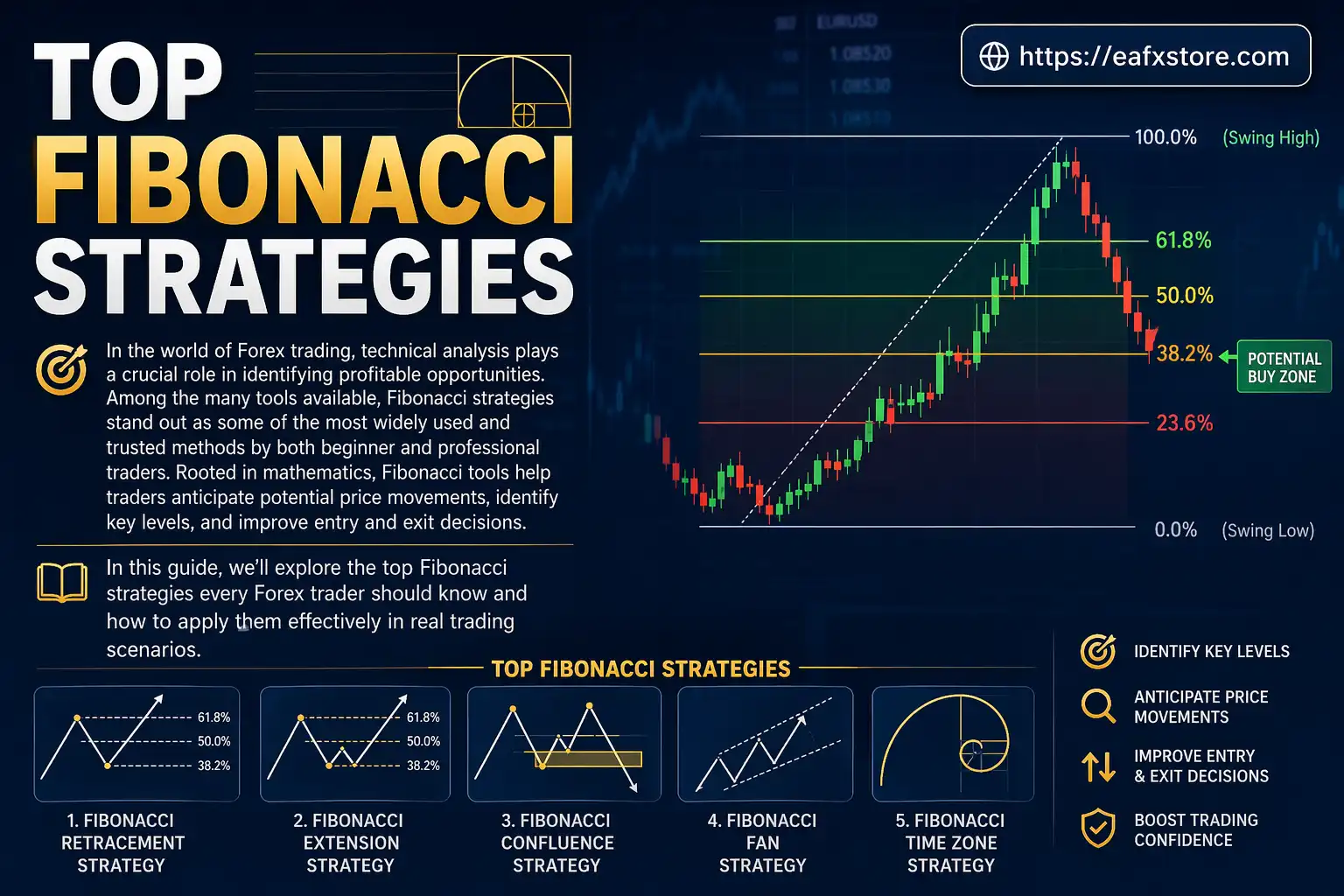
In the world of Forex trading, technical analysis plays a crucial role in identifying profitable opportunities. Among the many tools available, Fibonacci strategies stand out as some of the most widely used and trusted methods by both beginner and professional traders. Rooted in mathematics, Fibonacci tools help traders anticipate potential price movements, identify key levels, and improve entry and exit decisions.
In this guide, we’ll explore the top Fibonacci strategies every Forex trader should know and how to apply them effectively in real trading scenarios.
What Is Fibonacci in Forex Trading?
Fibonacci tools are based on a sequence of numbers discovered by Leonardo Fibonacci. In trading, the most important ratios derived from this sequence are:
- 23.6%
- 38.2%
- 50% (not a Fibonacci ratio but widely used)
- 61.8%
- 78.6%
These levels are used to identify potential support and resistance zones where price may reverse or continue.
1. Fibonacci Retracement Strategy
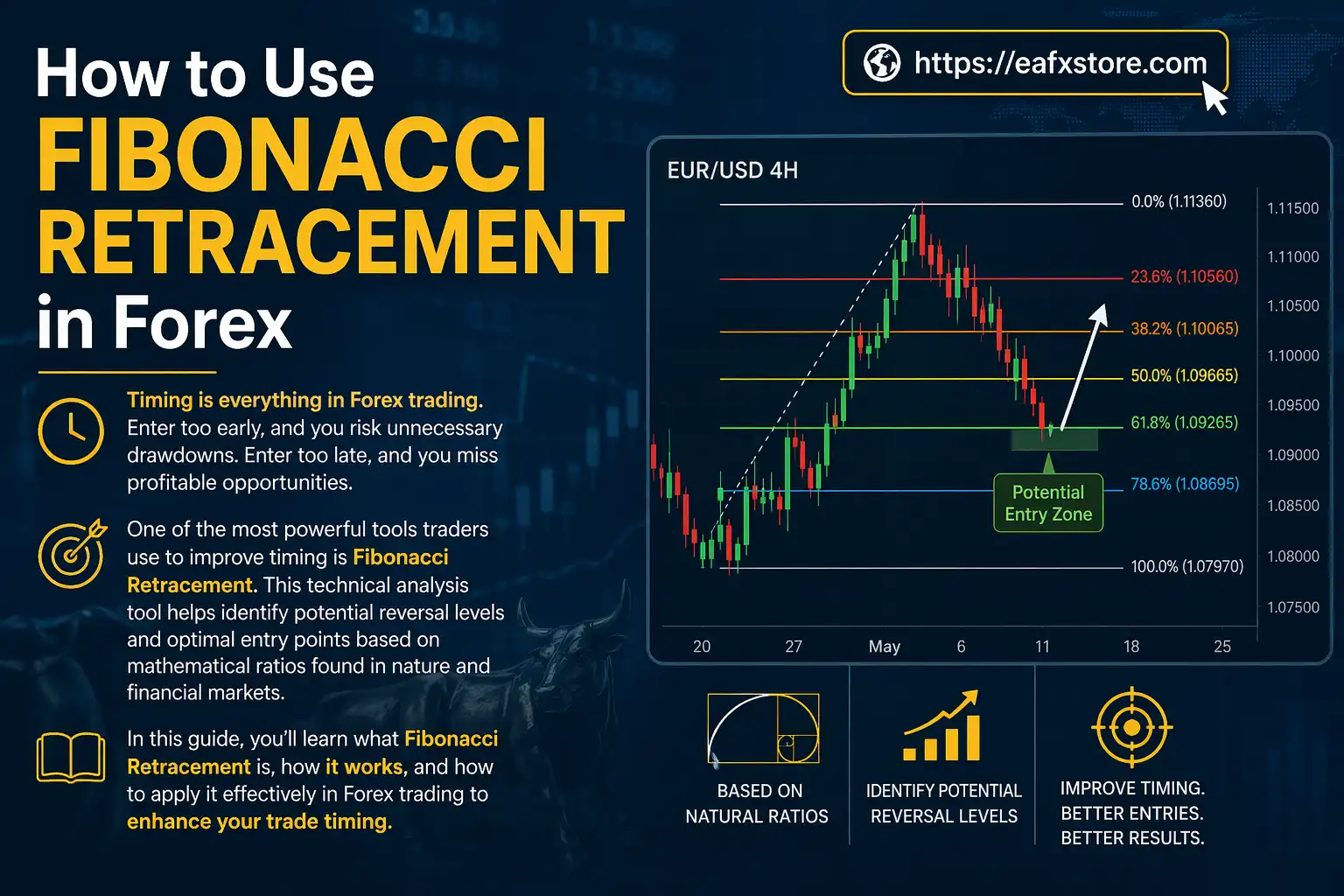
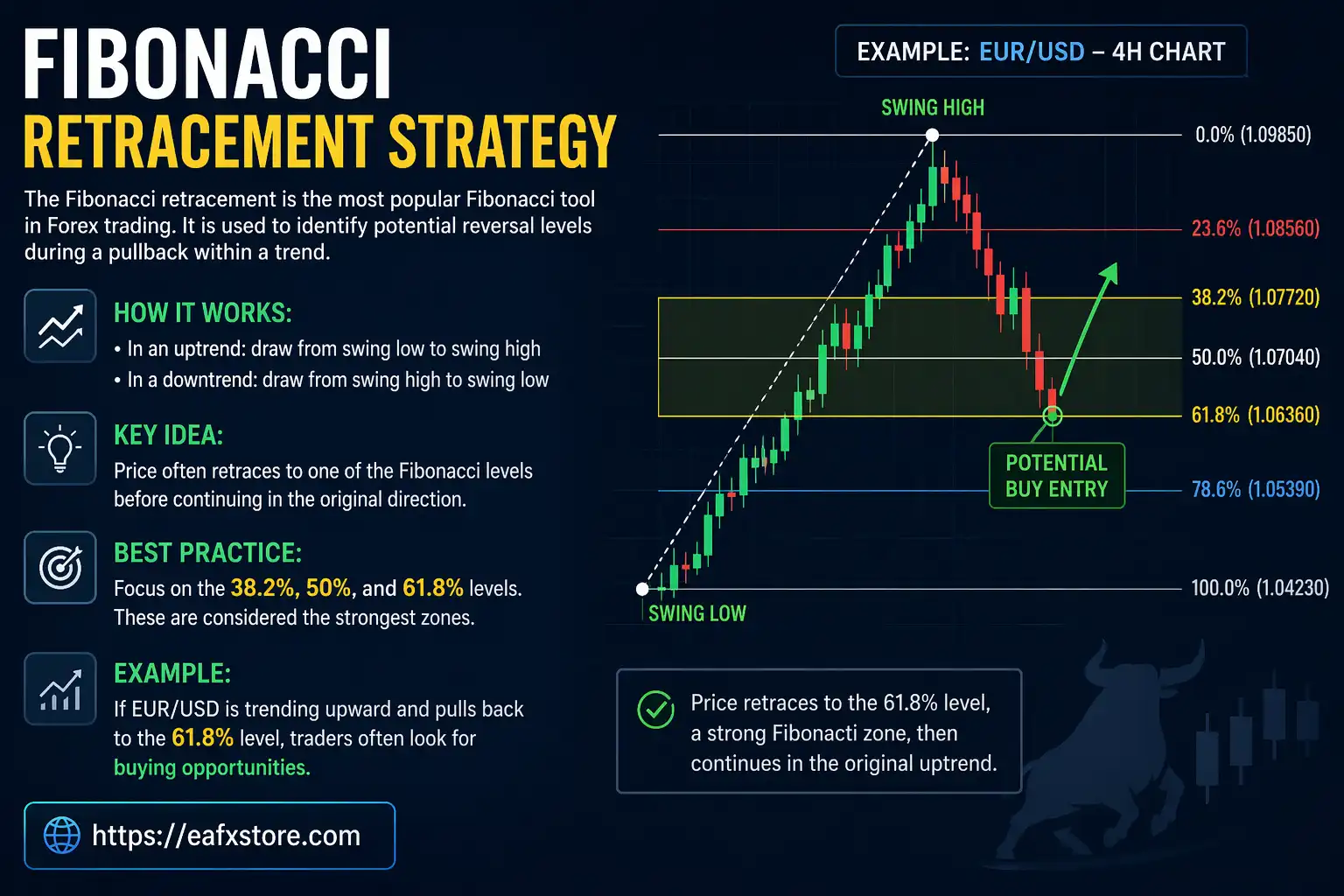
The Fibonacci retracement is the most popular Fibonacci tool in Forex trading. It is used to identify potential reversal levels during a pullback within a trend.
How It Works:
- In an uptrend: draw from swing low to swing high
- In a downtrend: draw from swing high to swing low
Key Idea:
Price often retraces to one of the Fibonacci levels before continuing in the original direction.
Best Practice:
Focus on the 38.2%, 50%, and 61.8% levels. These are considered the strongest zones.
Example:
If EUR/USD is trending upward and pulls back to the 61.8% level, traders often look for buying opportunities.
2. Fibonacci Extension Strategy
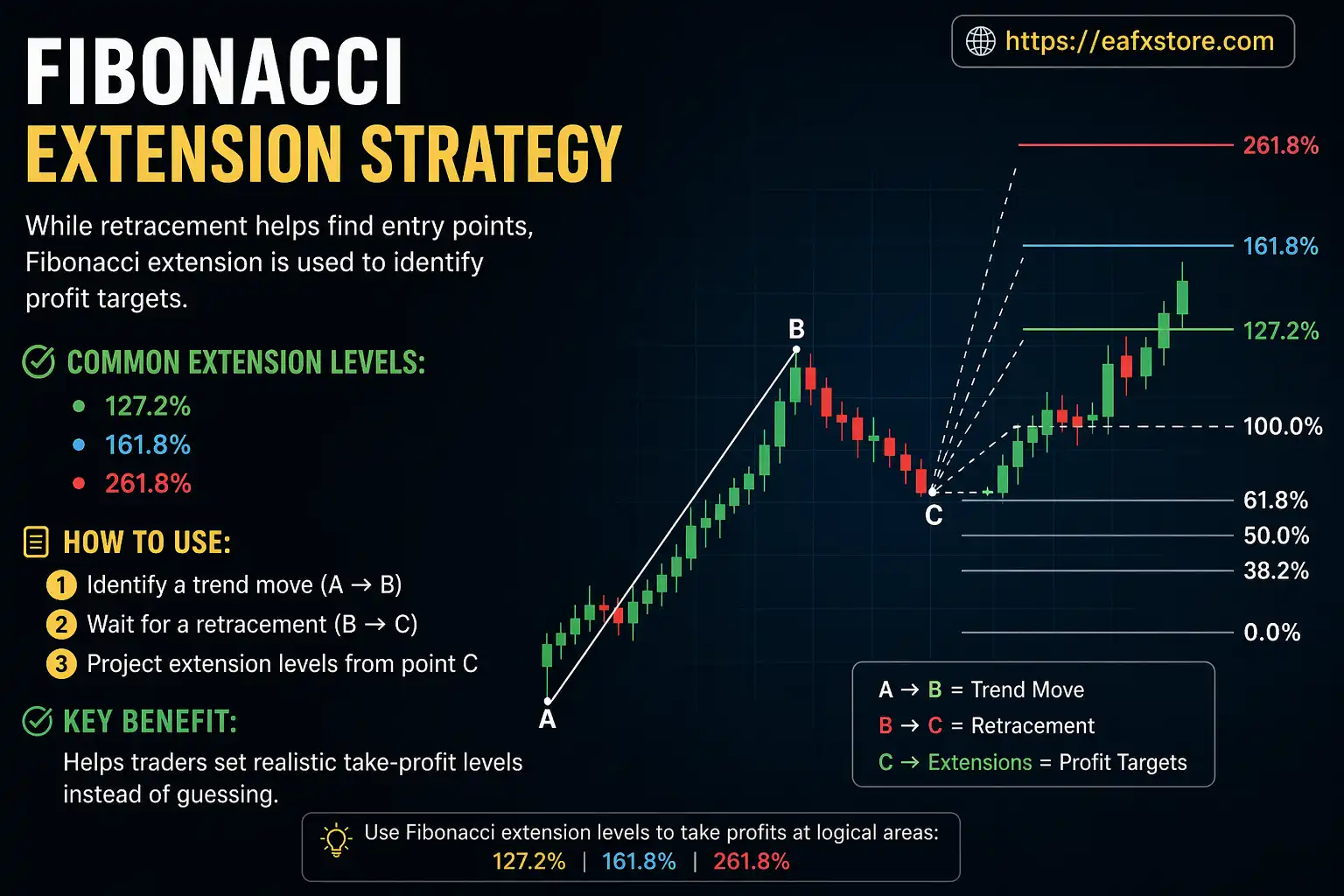
While retracement helps find entry points, Fibonacci extension is used to identify profit targets.
Common Extension Levels:
- 127.2%
- 161.8%
- 261.8%
How to Use:
- Identify a trend move (A → B)
- Wait for a retracement (B → C)
- Project extension levels from point C
Key Benefit:
Helps traders set realistic take-profit levels instead of guessing.
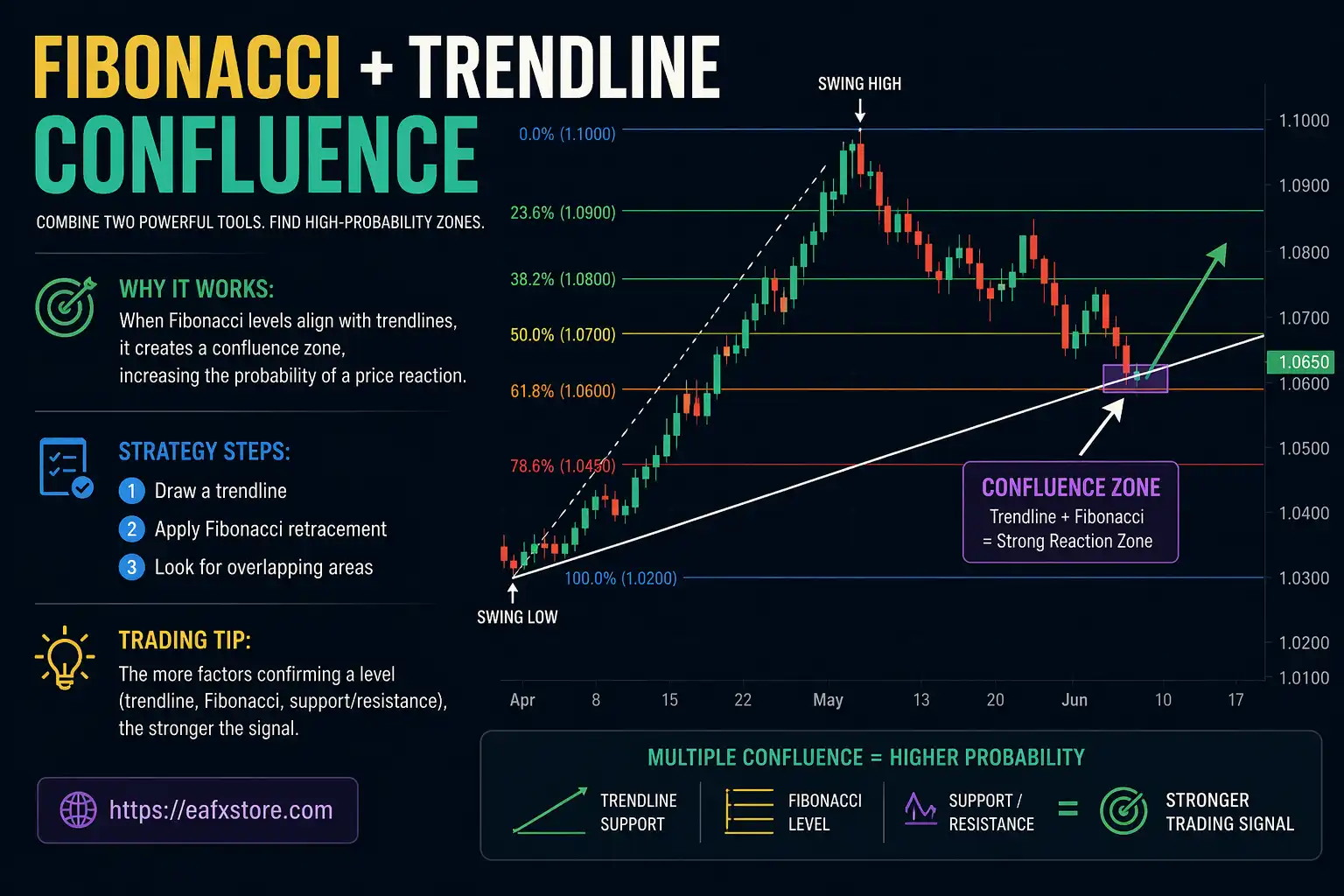
3. Fibonacci + Trendline Confluence
One of the most powerful ways to use Fibonacci is by combining it with trendlines.
Why It Works:
When Fibonacci levels align with trendlines, it creates a confluence zone, increasing the probability of a price reaction.
Strategy Steps:
- Draw a trendline
- Apply Fibonacci retracement
- Look for overlapping areas
Trading Tip:
The more factors confirming a level (trendline, Fibonacci, support/resistance), the stronger the signal.
4. Fibonacci + Support and Resistance
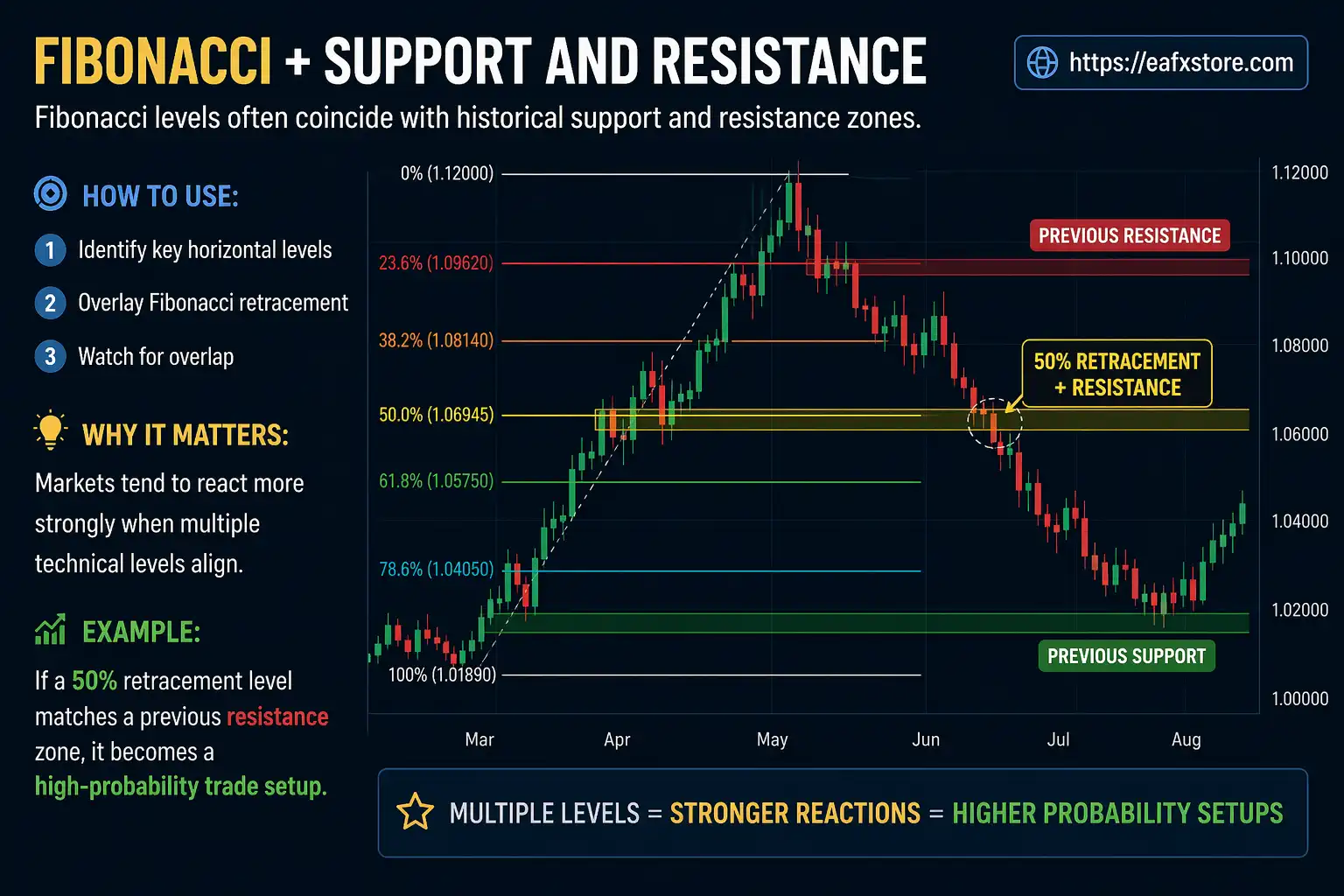
Fibonacci levels often coincide with historical support and resistance zones.
How to Use:
- Identify key horizontal levels
- Overlay Fibonacci retracement
- Watch for overlap
Why It Matters:
Markets tend to react more strongly when multiple technical levels align.
Example:
If a 50% retracement level matches a previous resistance zone, it becomes a high-probability trade setup.
5. Fibonacci + Candlestick Confirmation
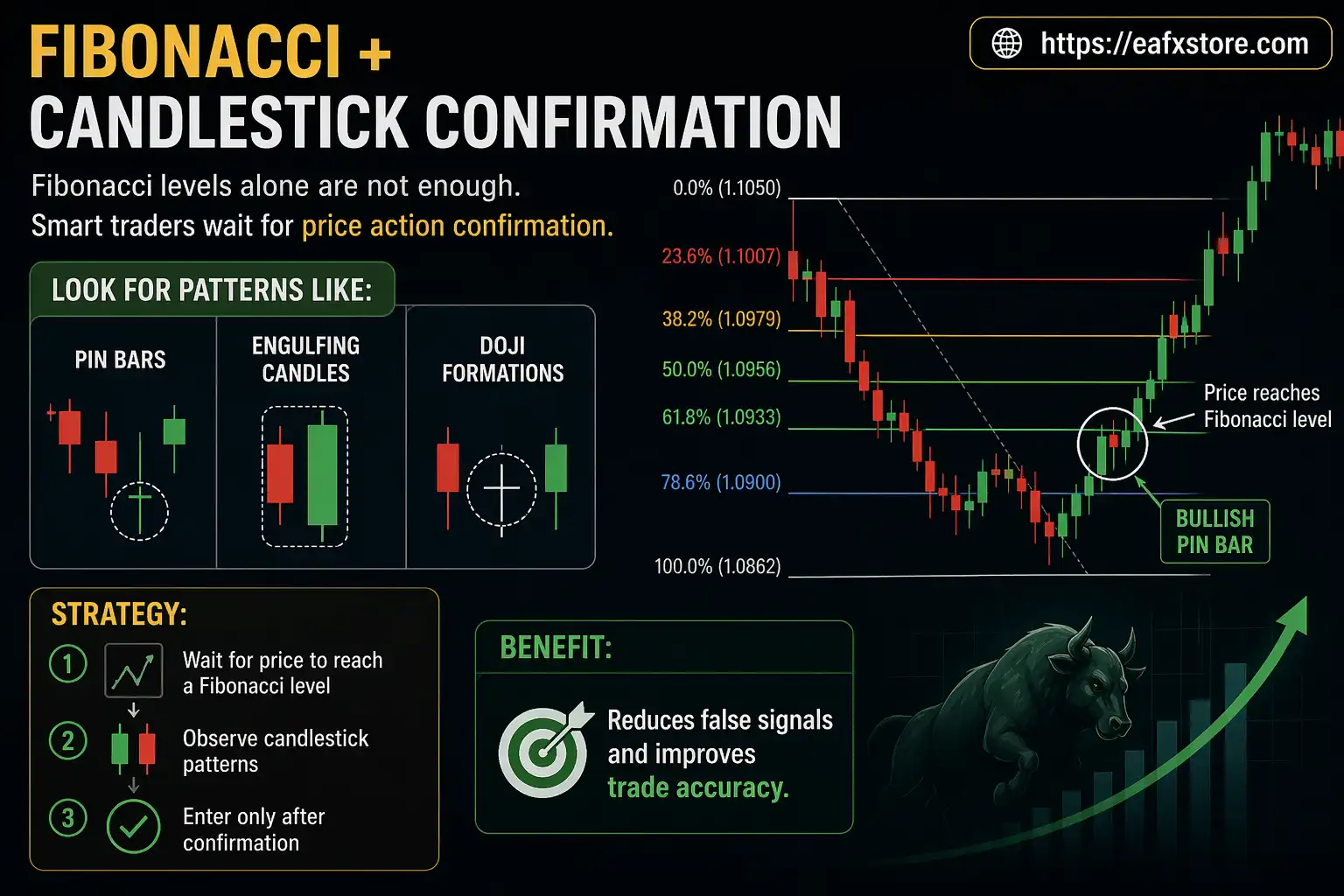
Fibonacci levels alone are not enough. Smart traders wait for price action confirmation.
Look for Patterns Like:
- Pin bars
- Engulfing candles
- Doji formations
Strategy:
- Wait for price to reach a Fibonacci level
- Observe candlestick patterns
- Enter only after confirmation
Benefit:
Reduces false signals and improves trade accuracy.
6. Fibonacci in Multiple Time Frames
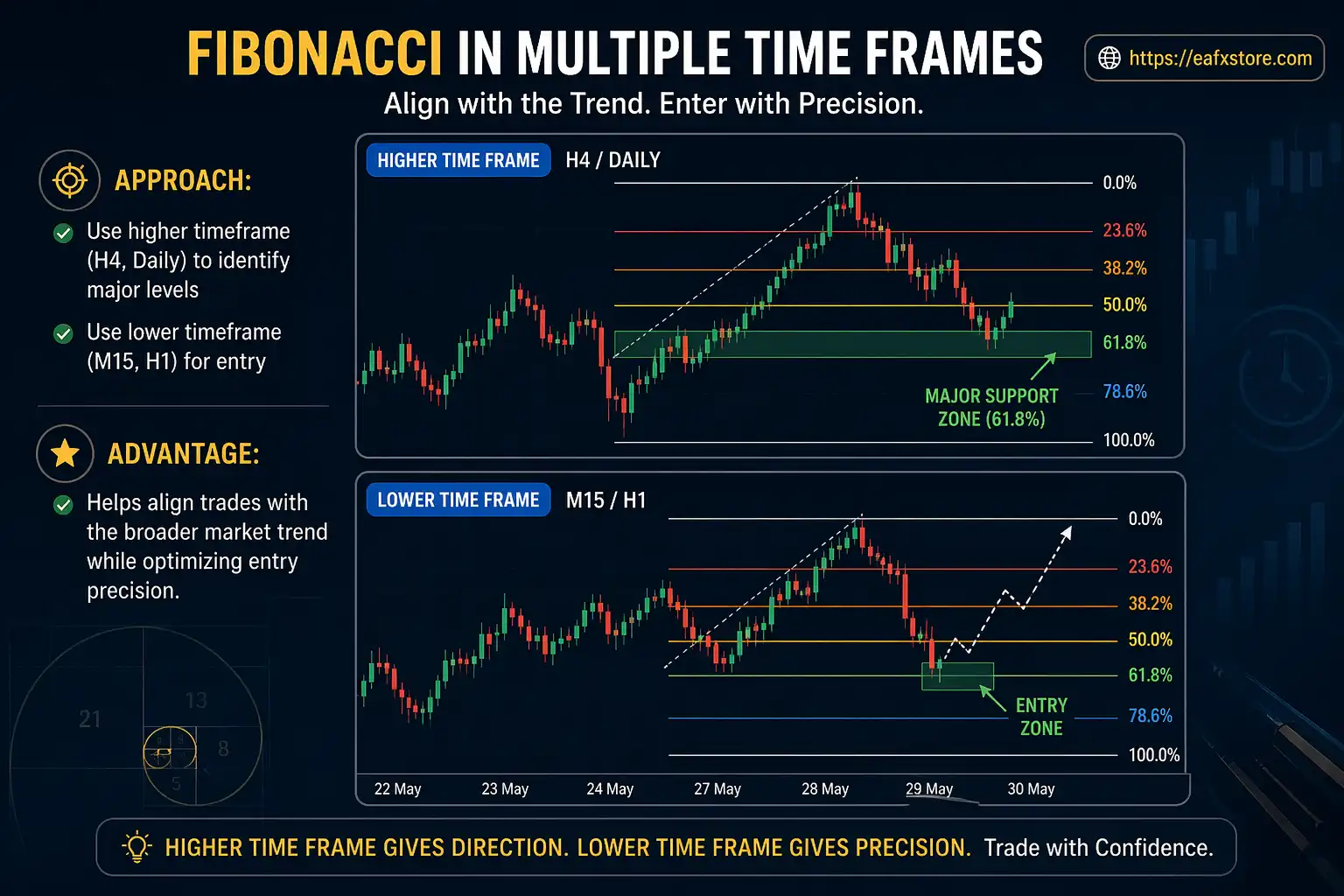
Professional traders often analyze Fibonacci levels across multiple timeframes.
Approach:
- Use higher timeframe (H4, Daily) to identify major levels
- Use lower timeframe (M15, H1) for entry
Advantage:
Helps align trades with the broader market trend while optimizing entry precision.
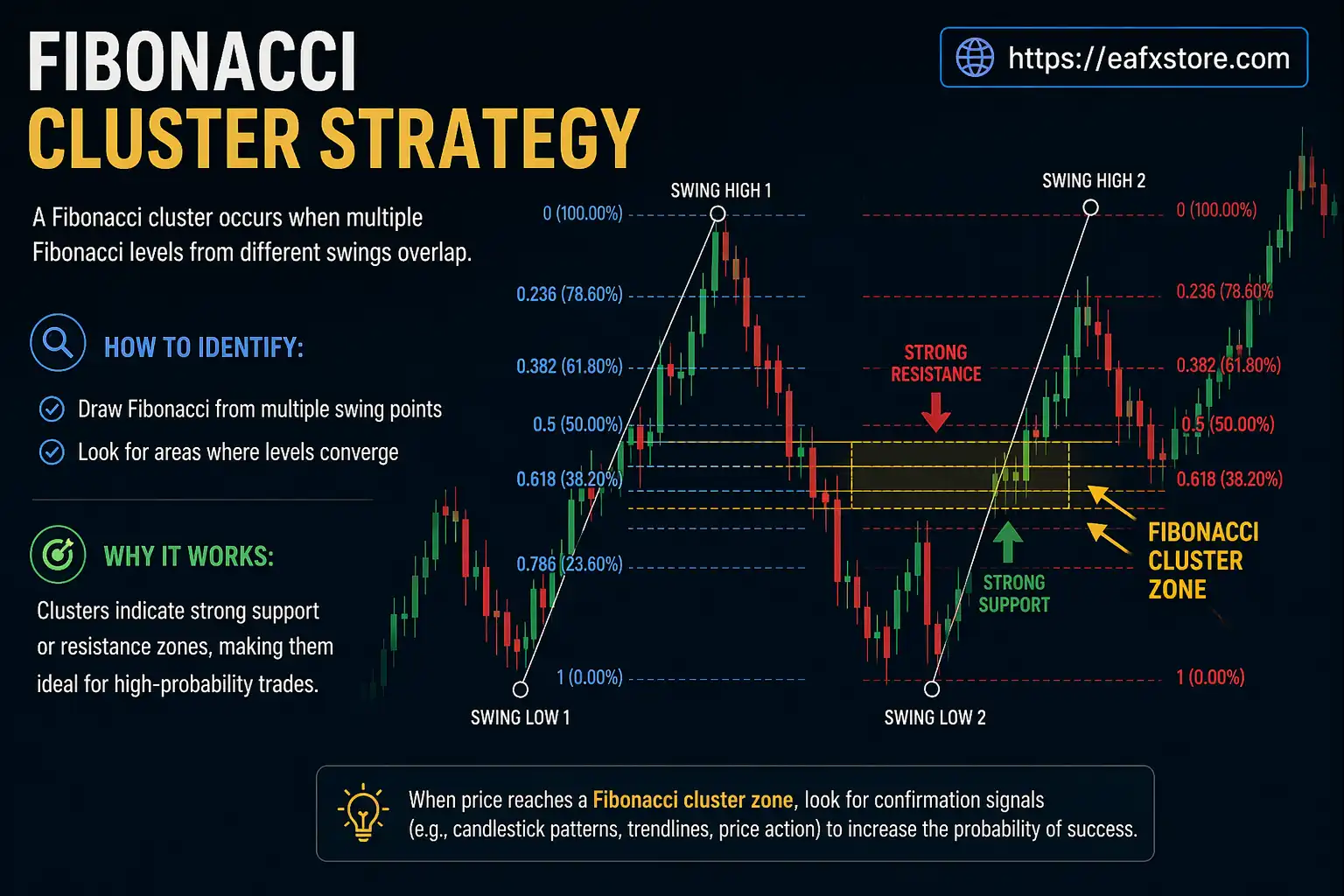
7. Fibonacci Cluster Strategy
A Fibonacci cluster occurs when multiple Fibonacci levels from different swings overlap.
How to Identify:
- Draw Fibonacci from multiple swing points
- Look for areas where levels converge
Why It Works:
Clusters indicate strong support or resistance zones, making them ideal for high-probability trades.
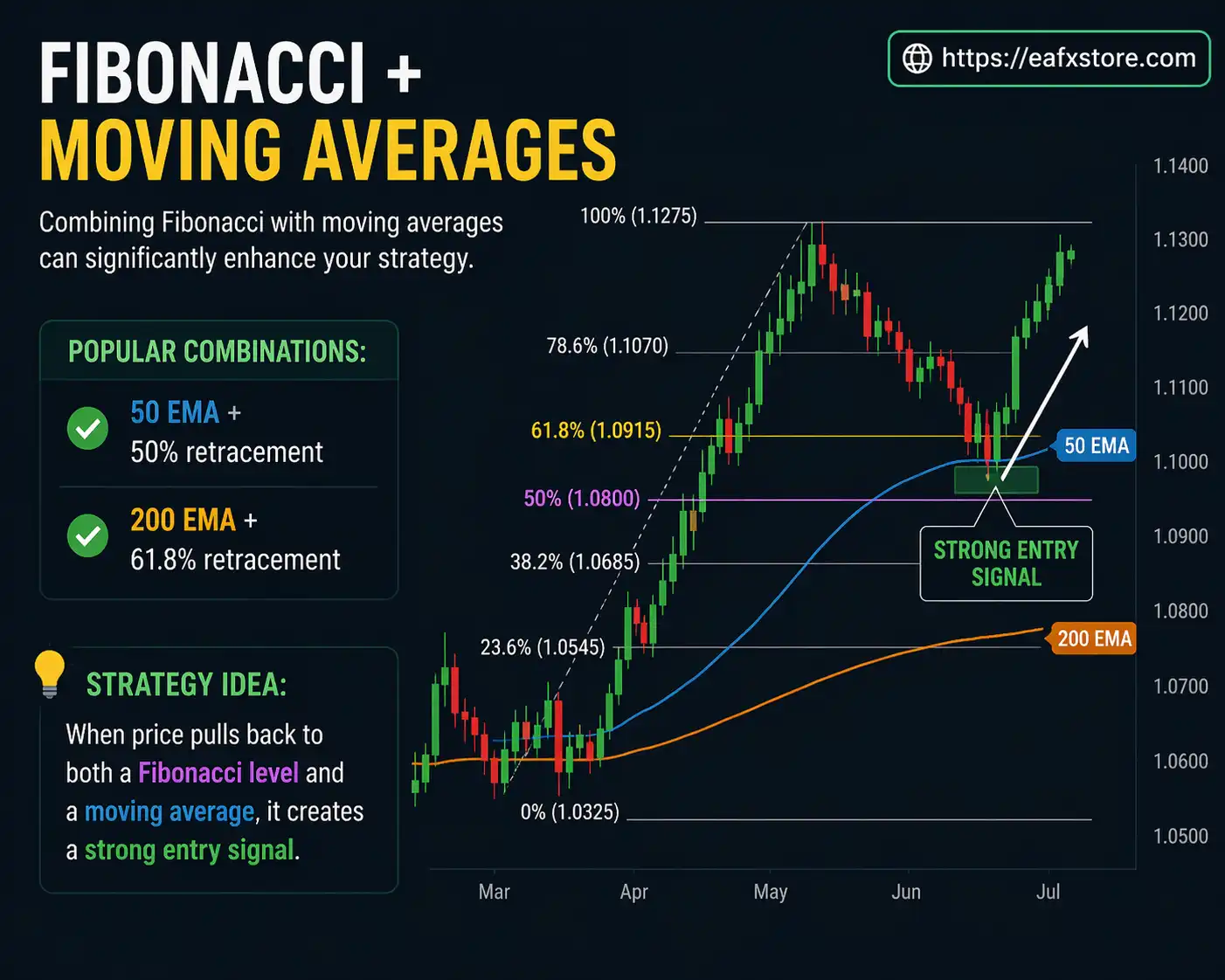
8. Fibonacci + Moving Averages
Combining Fibonacci with Moving Averages can significantly enhance your strategy.
Popular Combinations:
- 50 EMA + 50% retracement
- 200 EMA + 61.8% retracement
Strategy Idea:
When price pulls back to both a Fibonacci level and a moving average, it creates a strong entry signal.
Common Mistakes to Avoid
Even though Fibonacci is powerful, many traders misuse it. Here are some common mistakes:
1. Drawing Incorrect Swing Points
Always use clear and significant highs and lows.
2. Using Fibonacci Alone
Combine it with other indicators or price action.
3. Ignoring Market Context
Fibonacci works best in trending markets, not in sideways conditions.
4. Overloading Charts
Too many Fibonacci levels can create confusion. Keep it simple.
Pro Tips for Better Results
- Always trade with the trend
- Combine Fibonacci with volume or momentum indicators
- Backtest your strategy before using real money
- Use proper risk management (never risk more than 1–2% per trade)
Conclusion
Fibonacci strategies are essential tools in every Forex trader’s toolkit. From identifying entry points with retracements to setting profit targets with extensions, these techniques provide structure and clarity in a highly volatile market.
However, Fibonacci is not a magic solution. Its true power comes when combined with other forms of analysis such as trendlines, support/resistance and candlestick patterns.