
Introduction
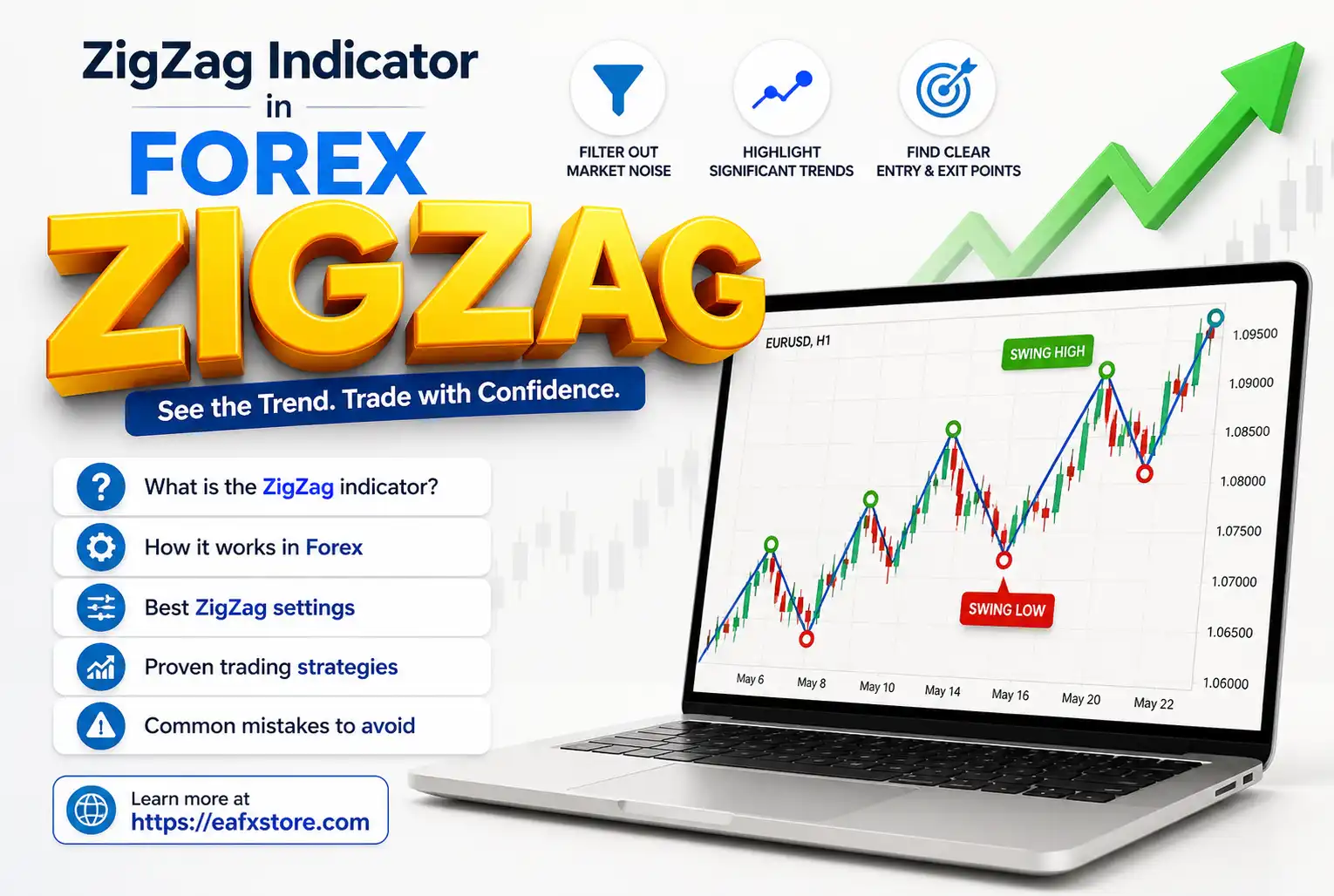
In Forex trading, one of the biggest challenges traders face is distinguishing real trends from market noise. Price movements often appear chaotic, making it difficult to identify clear entry and exit points.
This is where the ZigZag indicator in Forex becomes extremely useful.
The ZigZag indicator helps simplify price action by filtering out minor fluctuations and highlighting significant trends. Whether you’re a beginner or an experienced trader, understanding how to use this tool effectively can significantly improve your trading decisions.
In this guide, you’ll learn:
- What the ZigZag indicator is.
- How it works in Forex.
- Best ZigZag settings.
- Proven trading strategies.
- Common mistakes to avoid.
What Is the ZigZag Indicator?
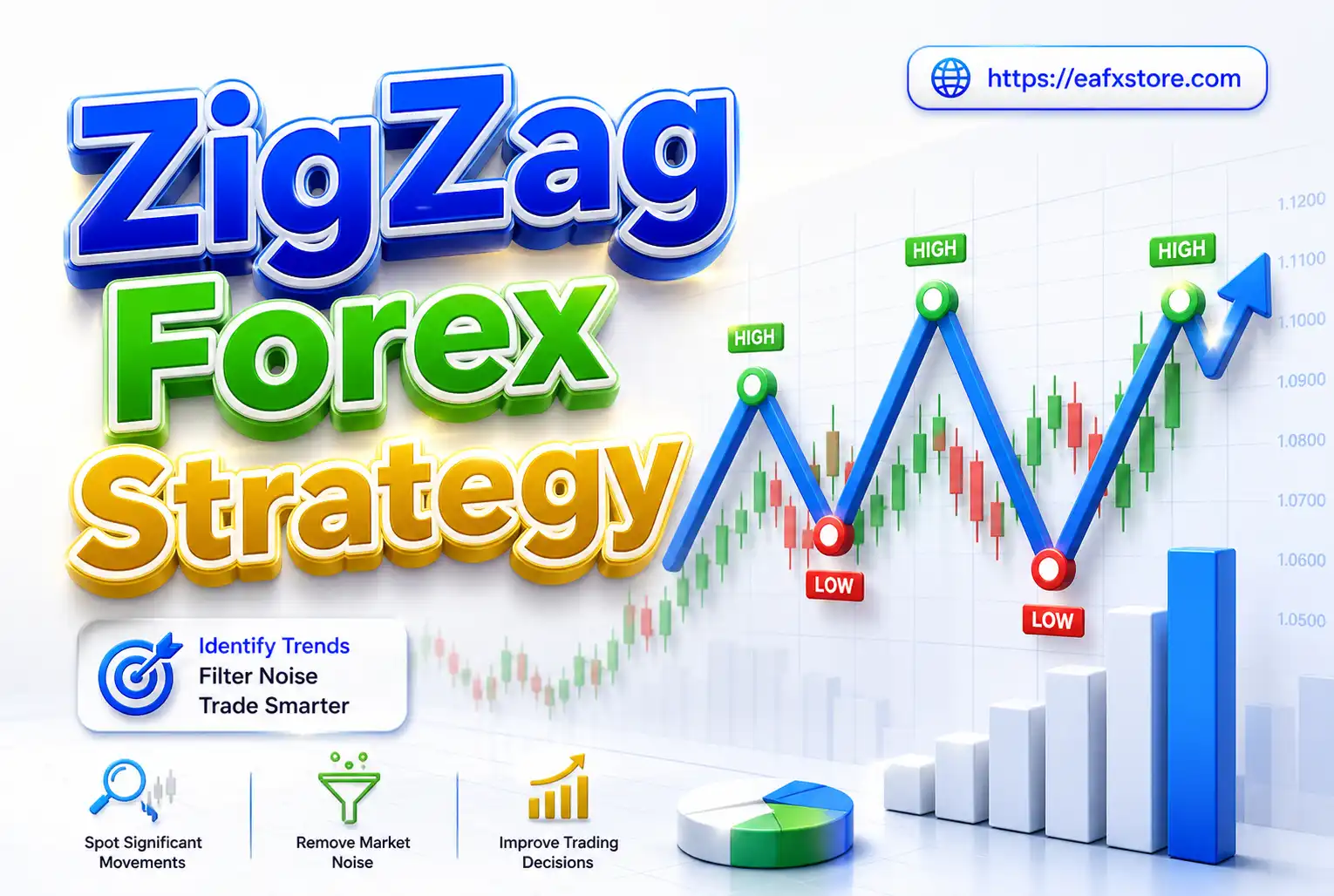
The ZigZag indicator is a technical analysis tool that tracks price movements and connects significant highs and lows with straight lines.
Unlike other indicators, ZigZag does not predict future prices. Instead, it:
- Filters out small price movements
- Highlights meaningful trends
- Makes chart patterns easier to see
Key Function: The main purpose of ZigZag is to remove “noise” from the market and focus only on significant price changes.
How the ZigZag Indicator Works
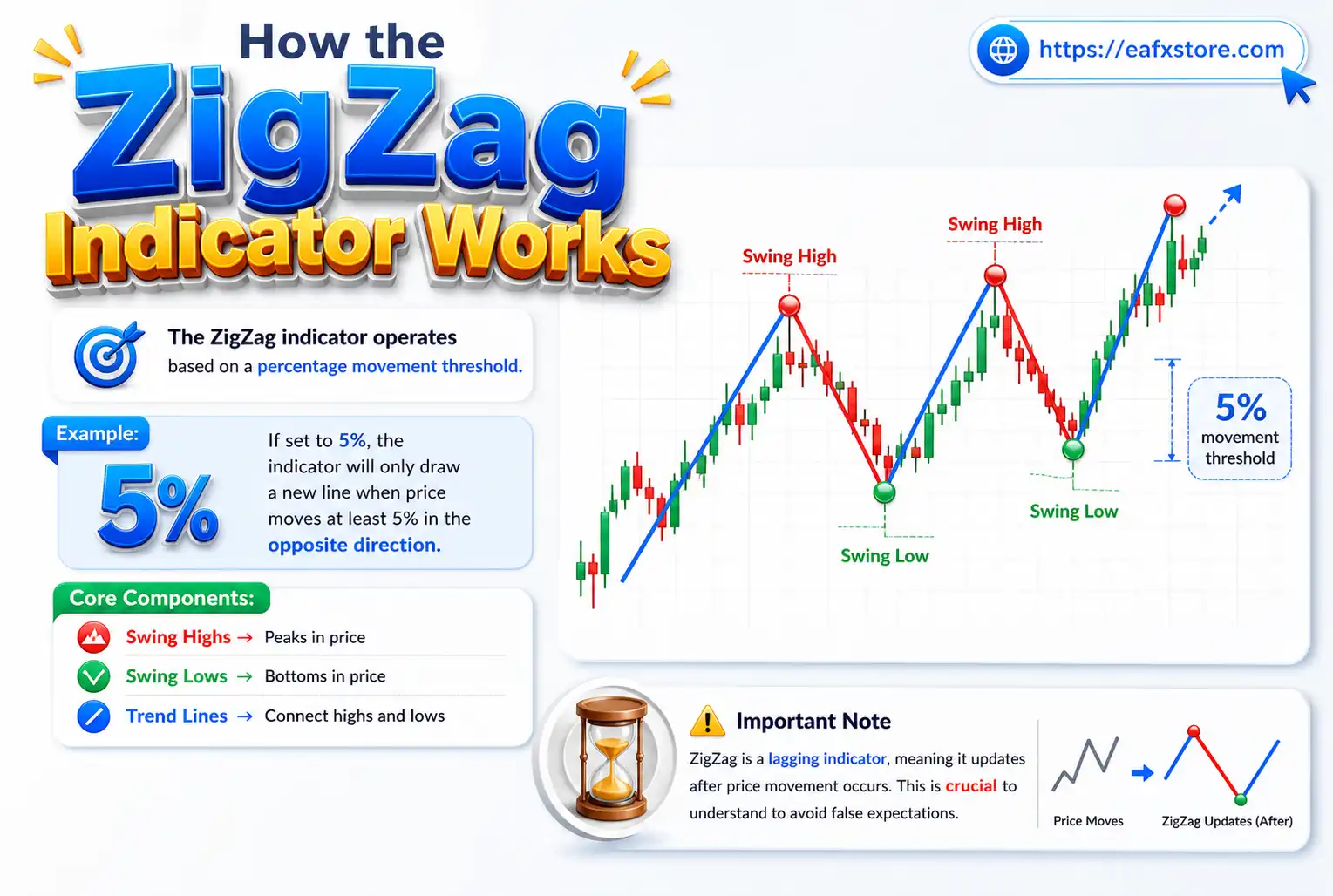
The ZigZag indicator operates based on a percentage movement threshold.
🎯 Example:
- If set to 5%, the indicator will only draw a new line when price moves at least 5% in the opposite direction.
🎯 Core Components:
- Swing Highs → Peaks in price
- Swing Lows → Bottoms in price
- Trend Lines → Connect highs and lows
🎯 Important Note
ZigZag is a lagging indicator, meaning it updates after price movement occurs. This is crucial to understand to avoid false expectations.
Best ZigZag Indicator Settings for Forex
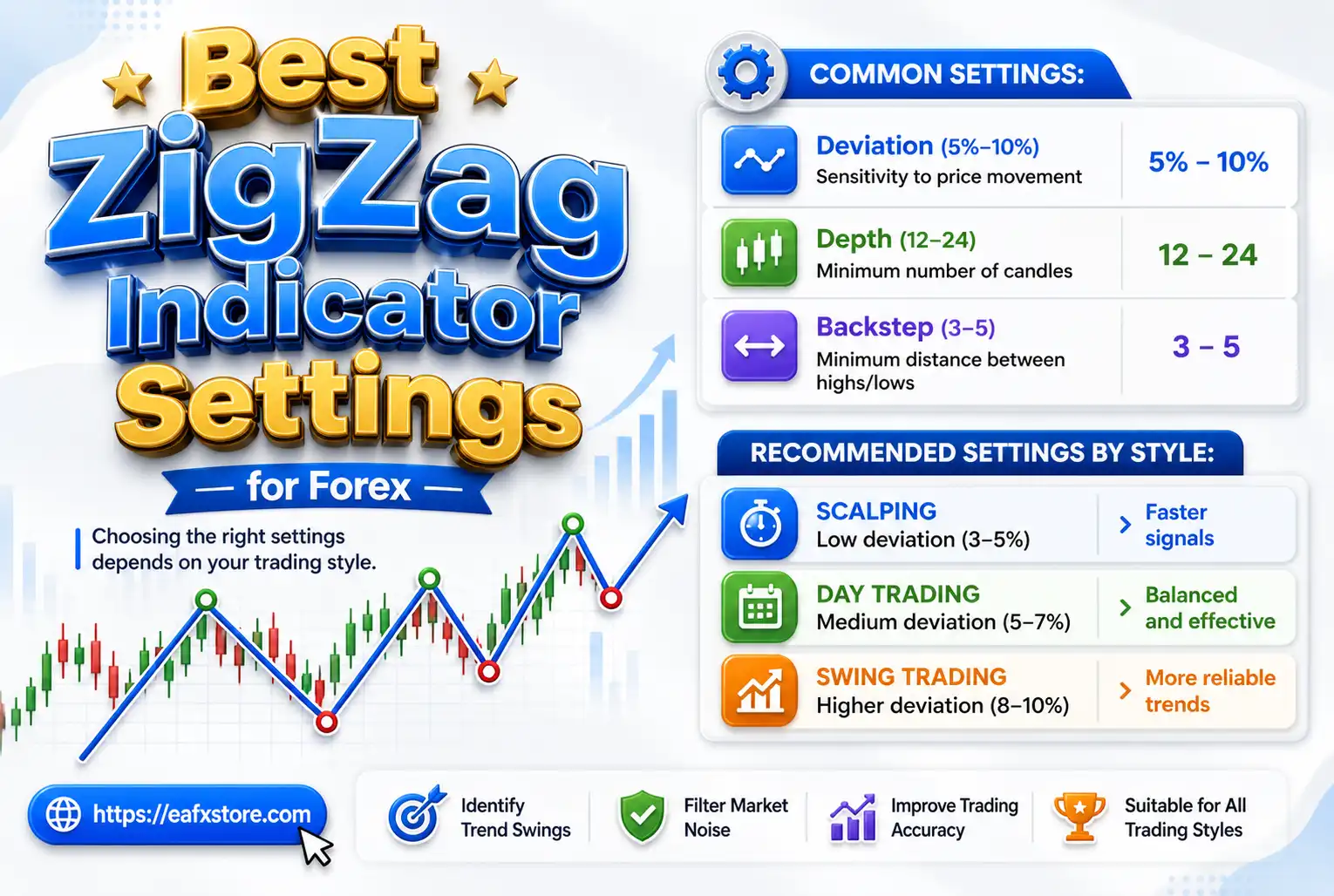
Choosing the right settings depends on your trading style.
🎯 Common Settings:
- Deviation (5%–10%) → Sensitivity to price movement
- Depth (12–24) → Minimum number of candles
- Backstep (3–5) → Minimum distance between highs/lows
🎯 Recommended Settings by Style:
🔶 Scalping:
- Low deviation (3–5%)
- Faster signals
🔶 Day Trading:
- Medium deviation (5–7%)
🔶 Swing Trading:
- Higher deviation (8–10%)
- More reliable trends
Why Use the ZigZag Indicator in Forex?
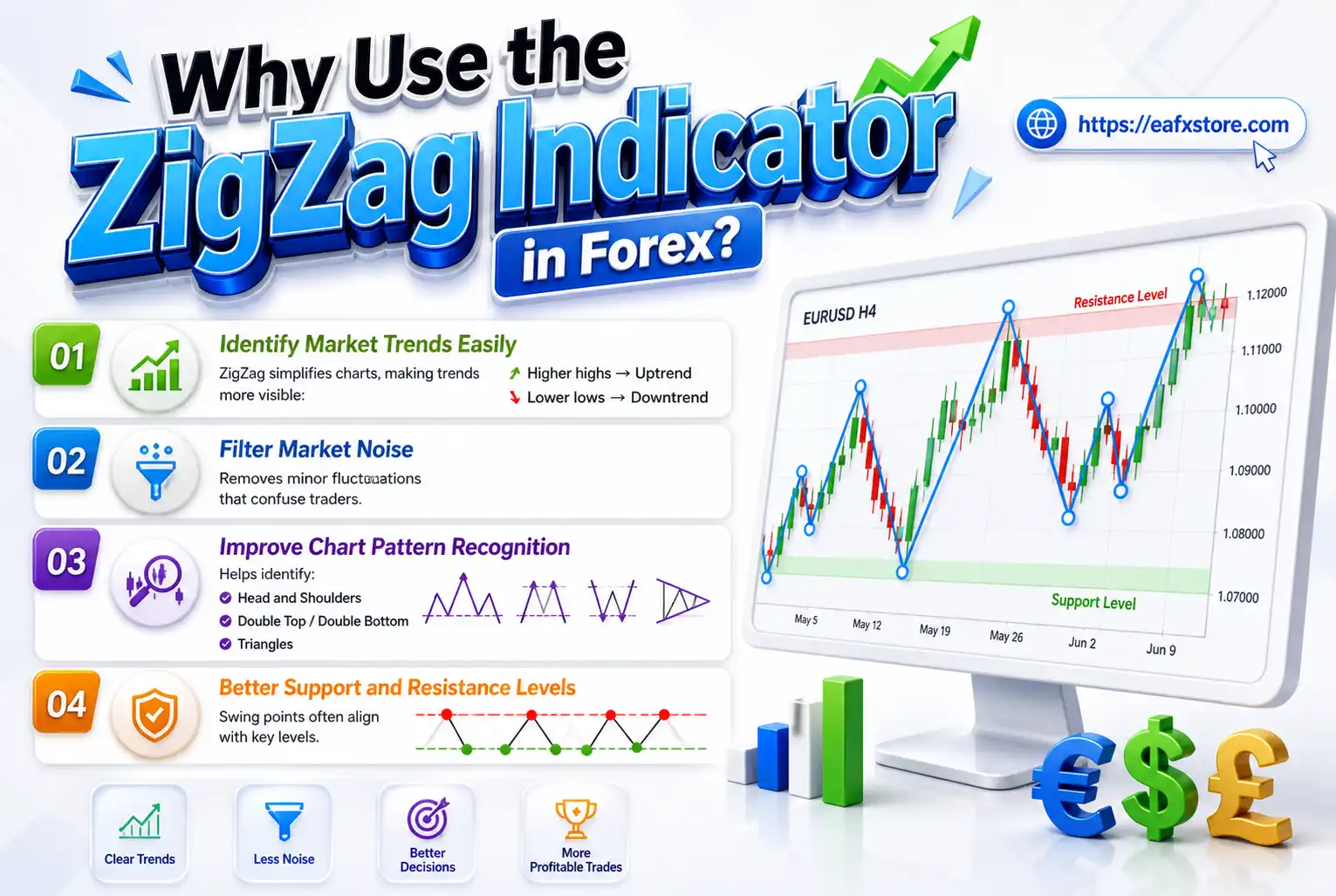
🎯 Identify Market Trends Easily
ZigZag simplifies charts, making trends more visible:
- Higher highs → Uptrend
- Lower lows → Downtrend
🎯 Filter Market Noise
Removes minor fluctuations that confuse traders.
🎯 Improve Chart Pattern Recognition
Helps identify:
- Head and Shoulders
- Double Top / Double Bottom
- Triangles
🎯 Better Support and Resistance Levels
Swing points often align with key levels.
How to Use ZigZag Indicator in Forex Trading
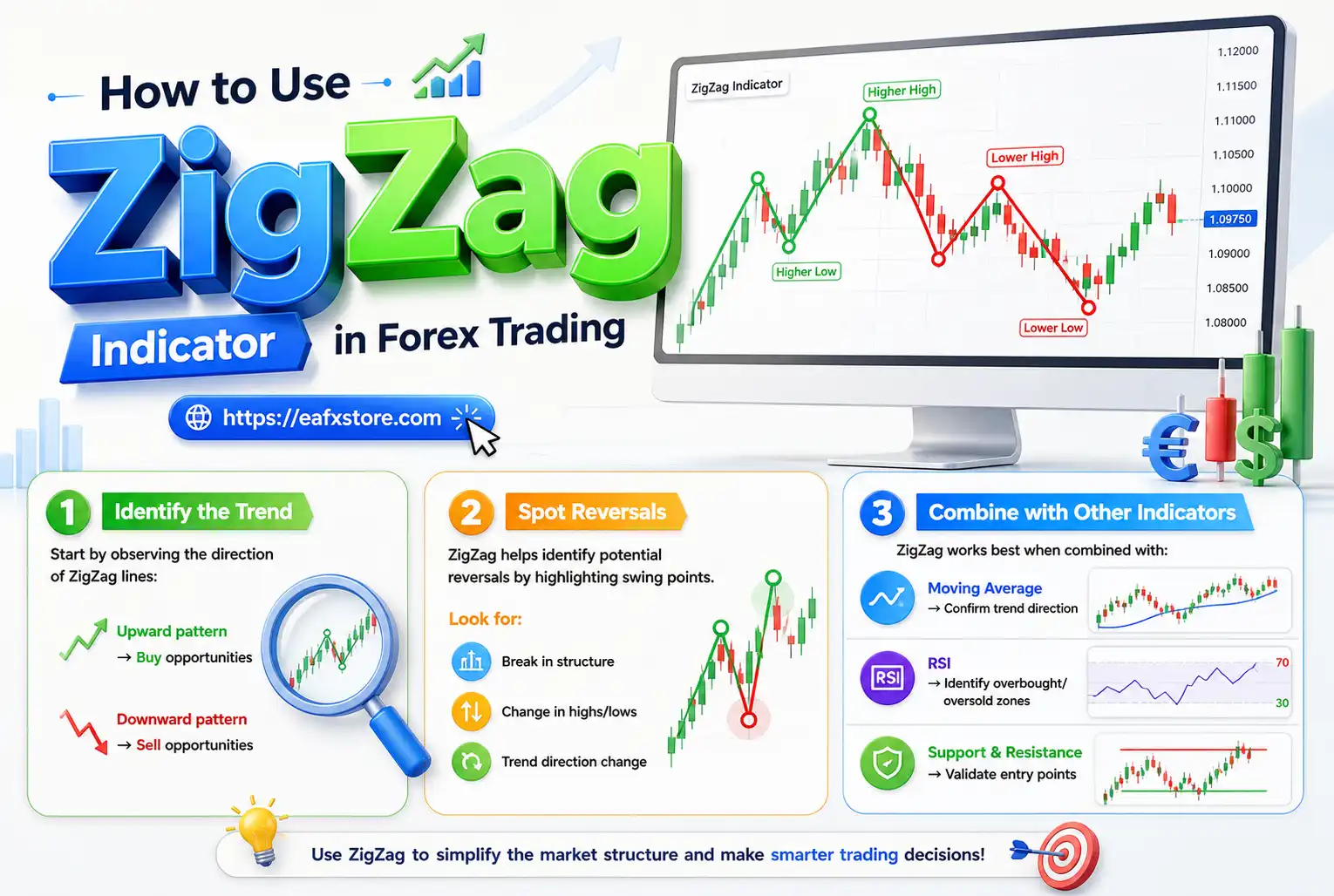
🎯 Identify the Trend
Start by observing the direction of ZigZag lines:
- Upward pattern → Buy opportunities
- Downward pattern → Sell opportunities
🎯 Spot Reversals
ZigZag helps identify potential reversals by highlighting swing points.
Look for:
- Break in structure
- Change in highs/lows
🎯 Combine with Other Indicators
ZigZag works best when combined with:
- Moving Average → Confirm trend direction
- RSI → Identify overbought/oversold zones
- Support & Resistance → Validate entry points
ZigZag Forex Trading Strategy (Step-by-Step)
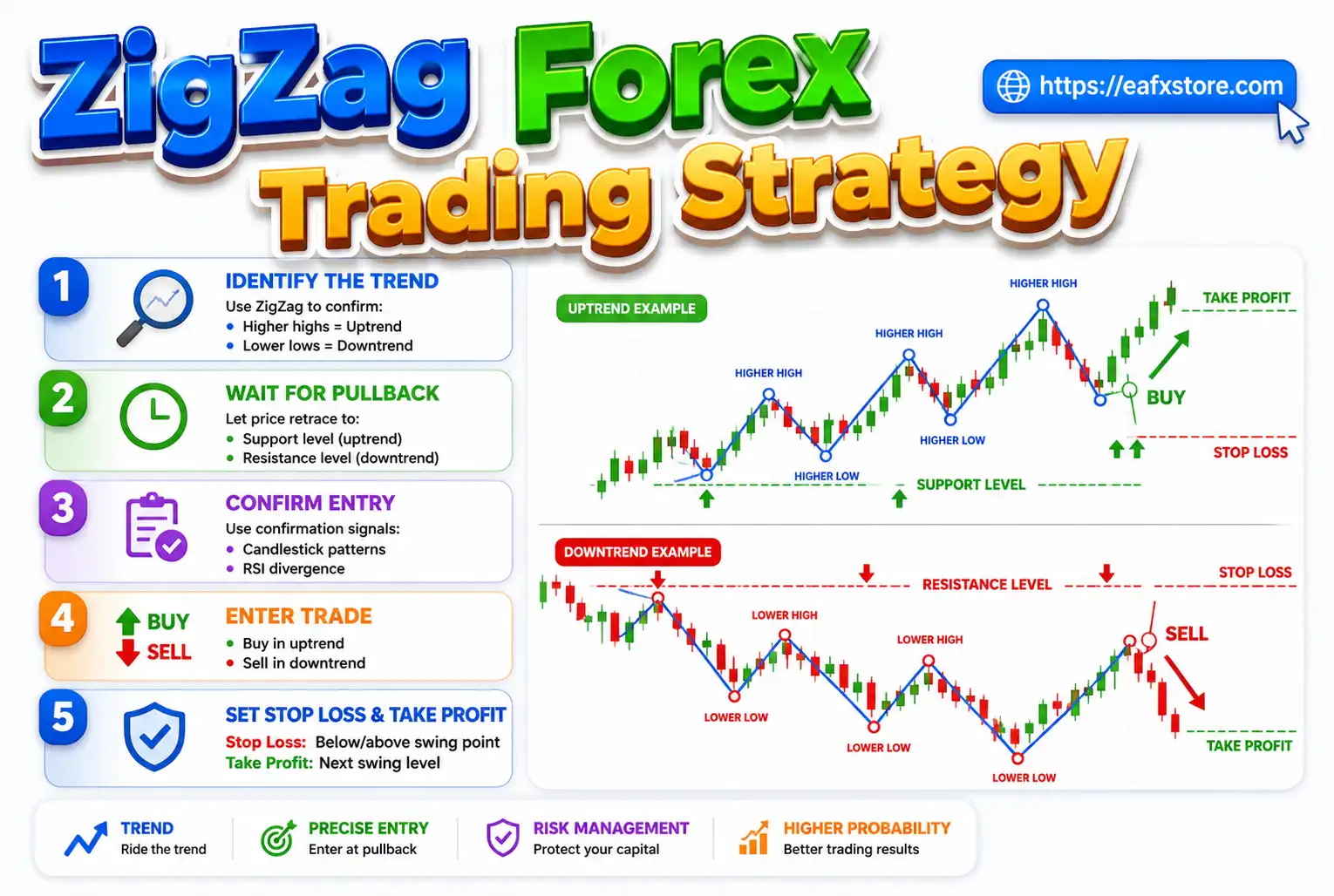
Strategy: Trend + Pullback Entry
🎯 Step 1: Identify the Trend
Use ZigZag to confirm:
- Higher highs = Uptrend
- Lower lows = Downtrend
🎯 Step 2: Wait for Pullback
Let price retrace to:
- Support level (uptrend)
- Resistance level (downtrend)
🎯 Step 3: Confirm Entry
Use confirmation signals:
- Candlestick patterns
- RSI divergence
🎯 Step 4: Enter Trade
- Buy in uptrend
- Sell in downtrend
🎯 Step 5: Set Stop Loss & Take Profit
- Stop Loss: Below/above swing point
- Take Profit: Next swing level
Advanced ZigZag Strategy
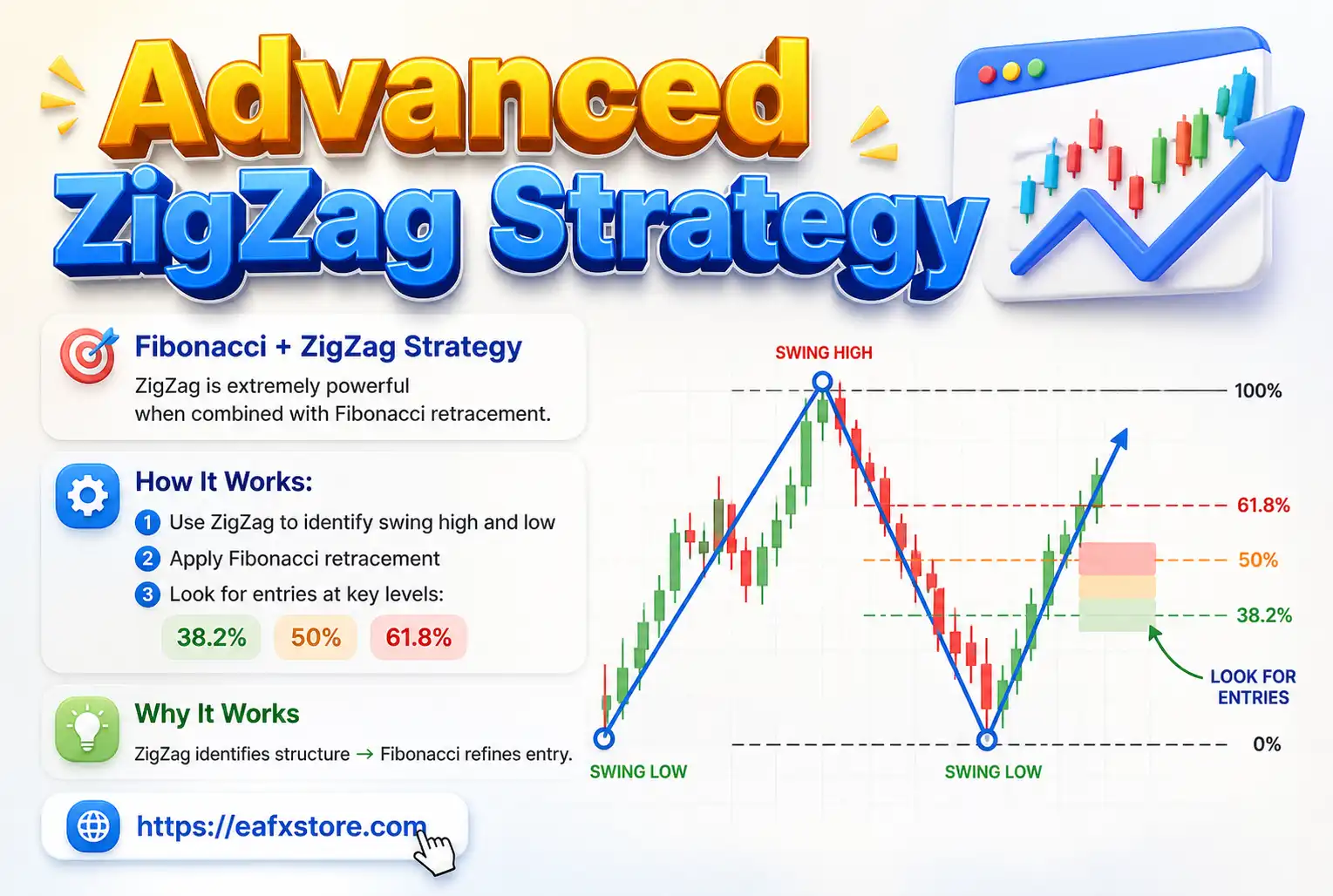
Fibonacci + ZigZag Strategy
ZigZag is extremely powerful when combined with Fibonacci retracement.
🎯 How It Works:
- Use ZigZag to identify swing high and low
- Apply Fibonacci retracement
- Look for entries at key levels:
- 38.2%
- 50%
- 61.8%
🎯 Why It Works
ZigZag identifies structure → Fibonacci refines entry.
Common Mistakes When Using ZigZag Indicator
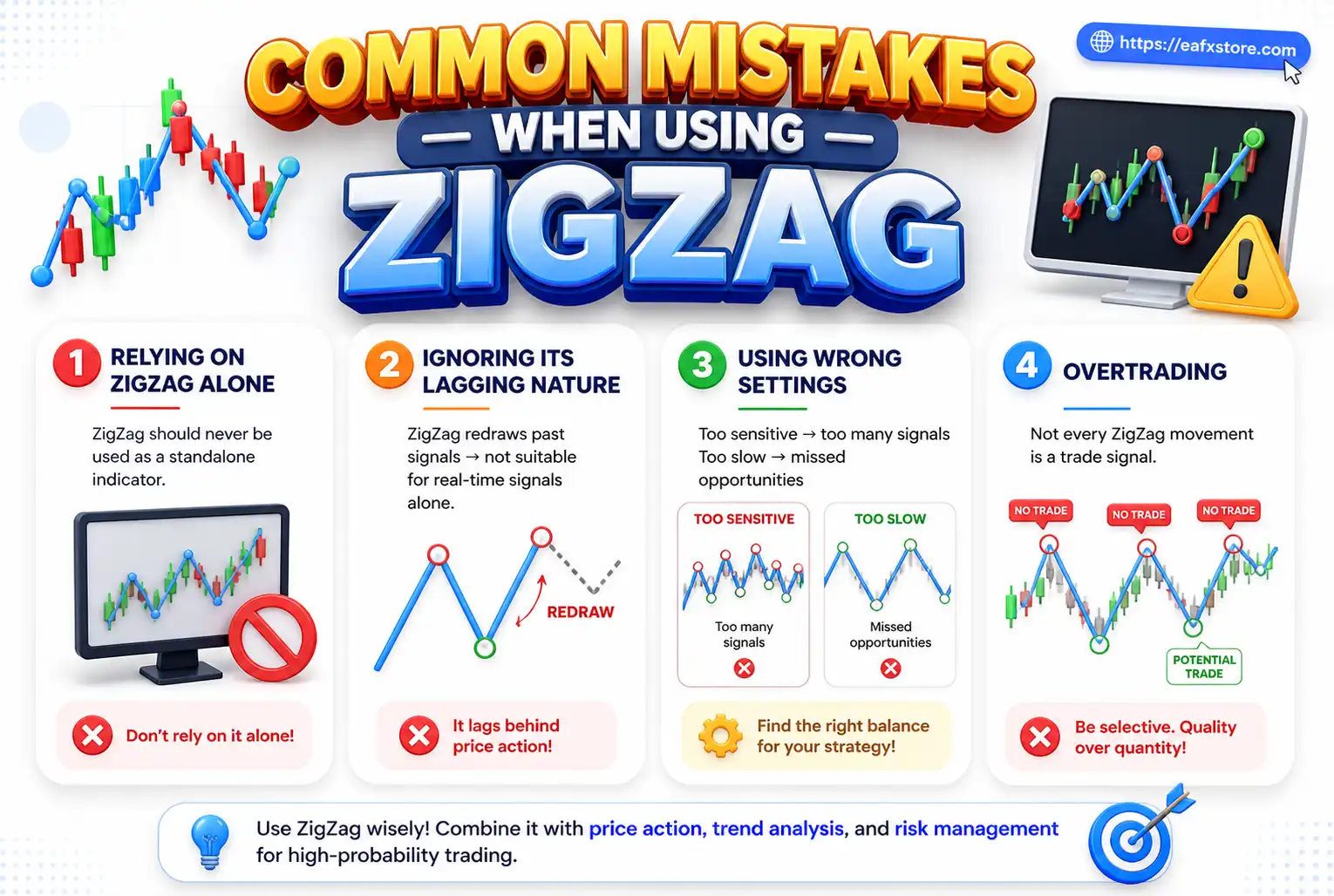
🎯 Relying on ZigZag Alone
ZigZag should never be used as a standalone indicator.
🎯 Ignoring Its Lagging Nature
ZigZag redraws past signals → not suitable for real-time signals alone.
🎯 Using Wrong Settings
Too sensitive → too many signals
Too slow → missed opportunities
🎯 Overtrading
Not every ZigZag movement is a trade signal.
Pros and Cons of ZigZag Indicator
🎯 Advantages
- Easy to understand
- Reduces noise
- Great for beginners
- Helps visualize trends
🎯 Disadvantages
- Lagging indicator
- Repaints past data
- Not predictive
Who Should Use ZigZag Indicator?
🎯 ZigZag is ideal for:
- Beginner traders learning structure
- Swing traders identifying trends
- Traders using price action
🎯 Not ideal for:
- High-frequency scalpers
- Traders relying on instant signals
Pro Tips for Better Results
- Always combine ZigZag with other indicators
- Focus on higher timeframes for accuracy
- Use it to confirm—not predict
- Backtest your strategy
Conclusion
The ZigZag indicator in Forex trading is a powerful tool for simplifying market structure and identifying trends. While it is not designed to predict future price movements, it provides clarity that many traders struggle to achieve.
When used correctly—especially in combination with other tools like RSI, Moving Averages, and Fibonacci—it can significantly improve your trading accuracy.
Key Takeaways:
- ZigZag helps filter noise and highlight trends.
- Best used with other indicators.
- Ideal for trend-following strategies.
- Requires proper settings and discipline.