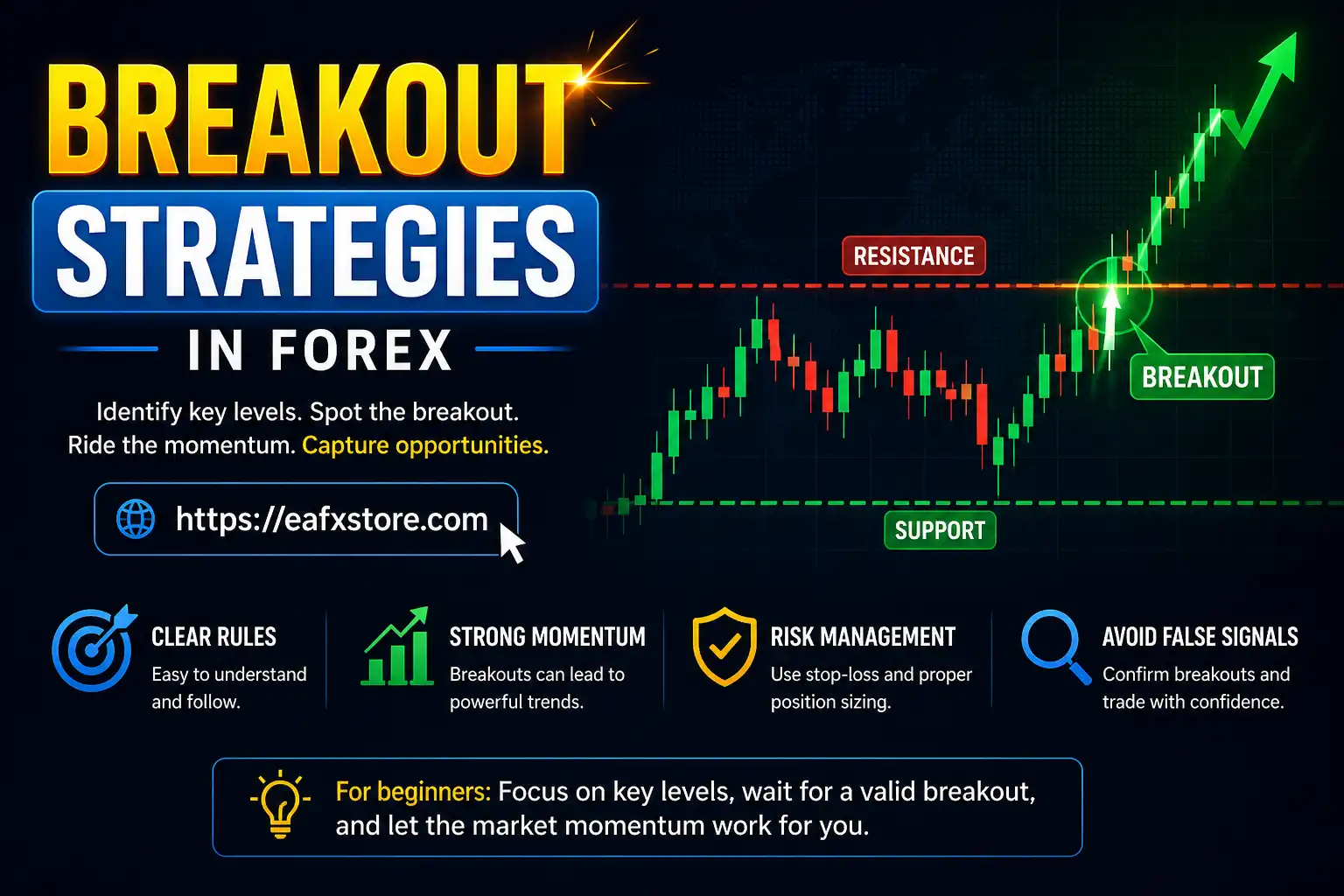


Breakout trading is one of the most popular and effective approaches in Forex markets. When price breaks through key levels, it often signals strong momentum and potential for significant profits. However, not all breakouts are created equal—false breakouts can trap traders and lead to losses.
In this guide, you’ll discover 10 proven breakout strategies that actually work, along with practical insights to improve your trading performance.
What Is a Breakout in Forex Trading?
A breakout occurs when the price moves beyond a defined support or resistance level with increased volume or momentum. This movement often indicates the start of a new trend or continuation of an existing one.
Traders use breakout strategies to enter the market early in a move, aiming to capture large price swings. The key challenge is distinguishing between real breakouts and fake ones.
1. Support and Resistance Breakout Strategy
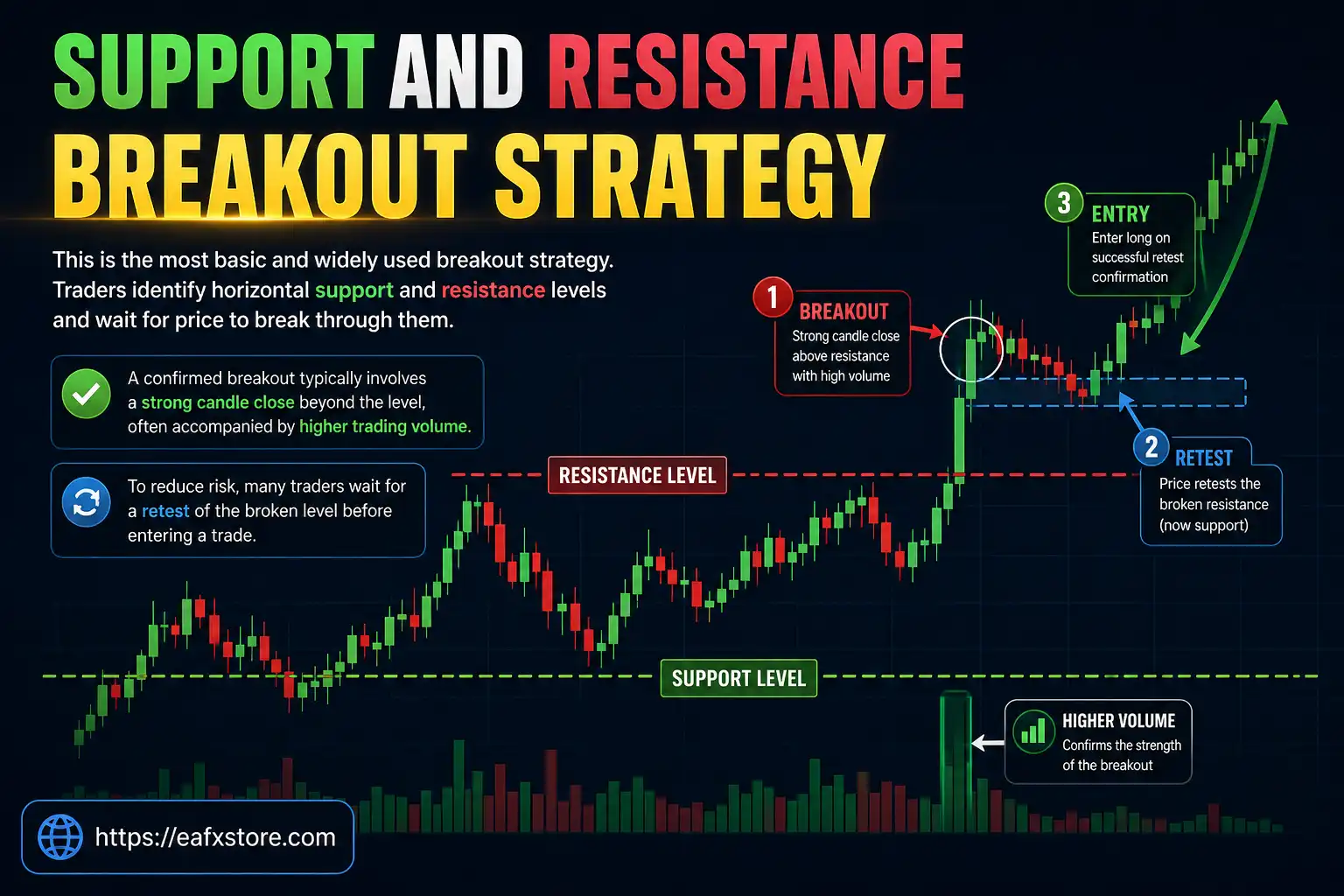
This is the most basic and widely used breakout strategy. Traders identify horizontal support and resistance levels and wait for price to break through them.
A confirmed breakout typically involves a strong candle close beyond the level, often accompanied by higher trading volume. To reduce risk, many traders wait for a retest of the broken level before entering a trade.
2. Trendline Breakout Strategy
Trendlines help identify the direction of the market. When price breaks a trendline, it can signal a reversal or acceleration of the current trend.
For better accuracy, traders should draw trendlines using at least two or three touchpoints. A breakout backed by momentum or news events often provides stronger confirmation.

3. Breakout with Volume Confirmation
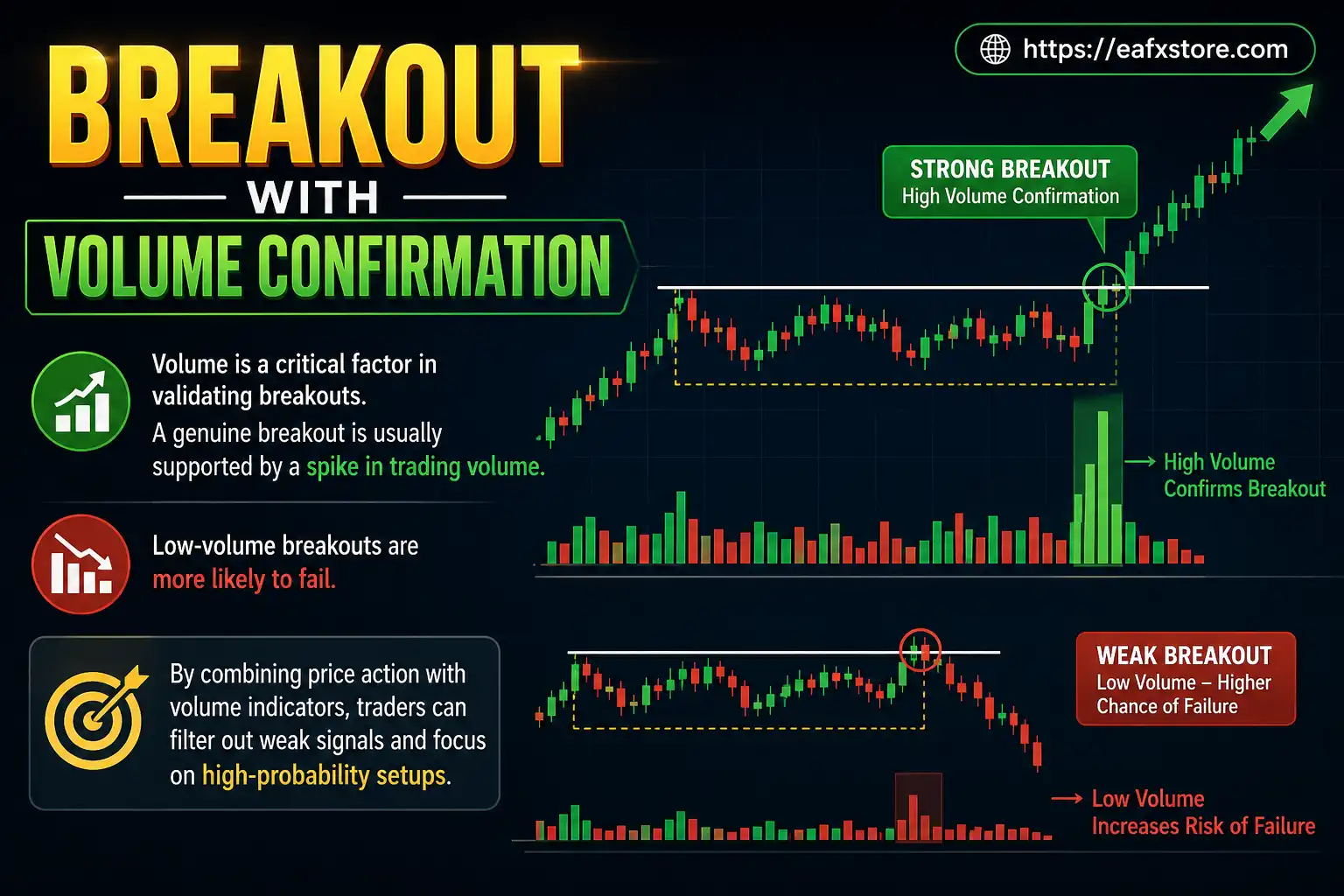
Volume is a critical factor in validating breakouts. A genuine breakout is usually supported by a spike in trading volume.
Low-volume breakouts are more likely to fail. By combining price action with volume indicators, traders can filter out weak signals and focus on high-probability setups.
4. Asian Session Breakout Strategy
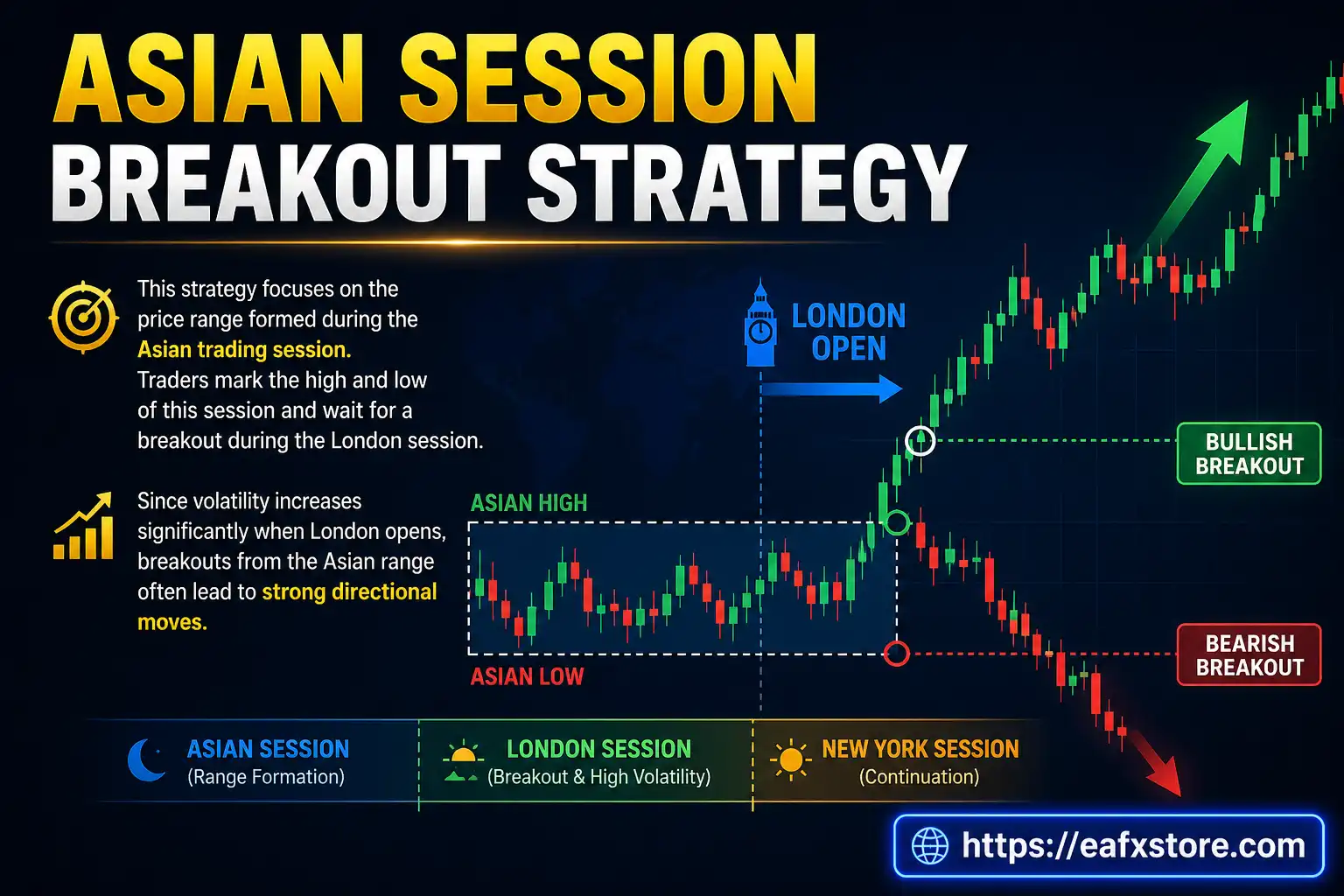
This strategy focuses on the price range formed during the Asian trading session. Traders mark the high and low of this session and wait for a breakout during the London session.
Since volatility increases significantly when London opens, breakouts from the Asian range often lead to strong directional moves.
5. News Breakout Strategy
Major economic news releases can cause sharp price movements. Traders use this volatility to capture breakout opportunities.
However, this strategy requires careful risk management. Spreads can widen, and slippage is common. It’s best suited for experienced traders who understand market reactions to news events.

6. Bollinger Bands Breakout Strategy
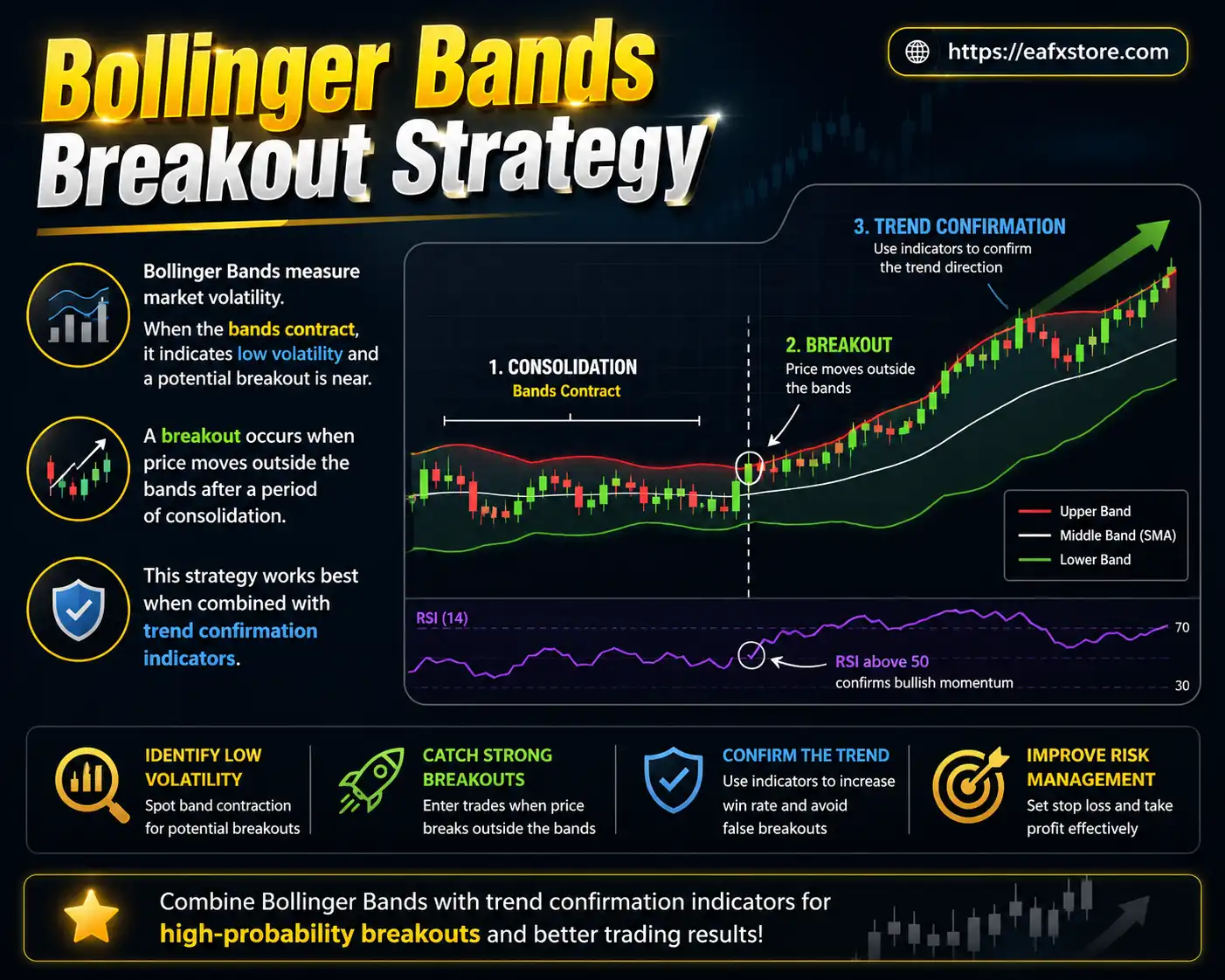
Bollinger Bands measure market volatility. When the bands contract, it indicates low volatility and a potential breakout is near.
A breakout occurs when price moves outside the bands after a period of consolidation. This strategy works best when combined with trend confirmation indicators.
7. Rectangle (Range) Breakout Strategy
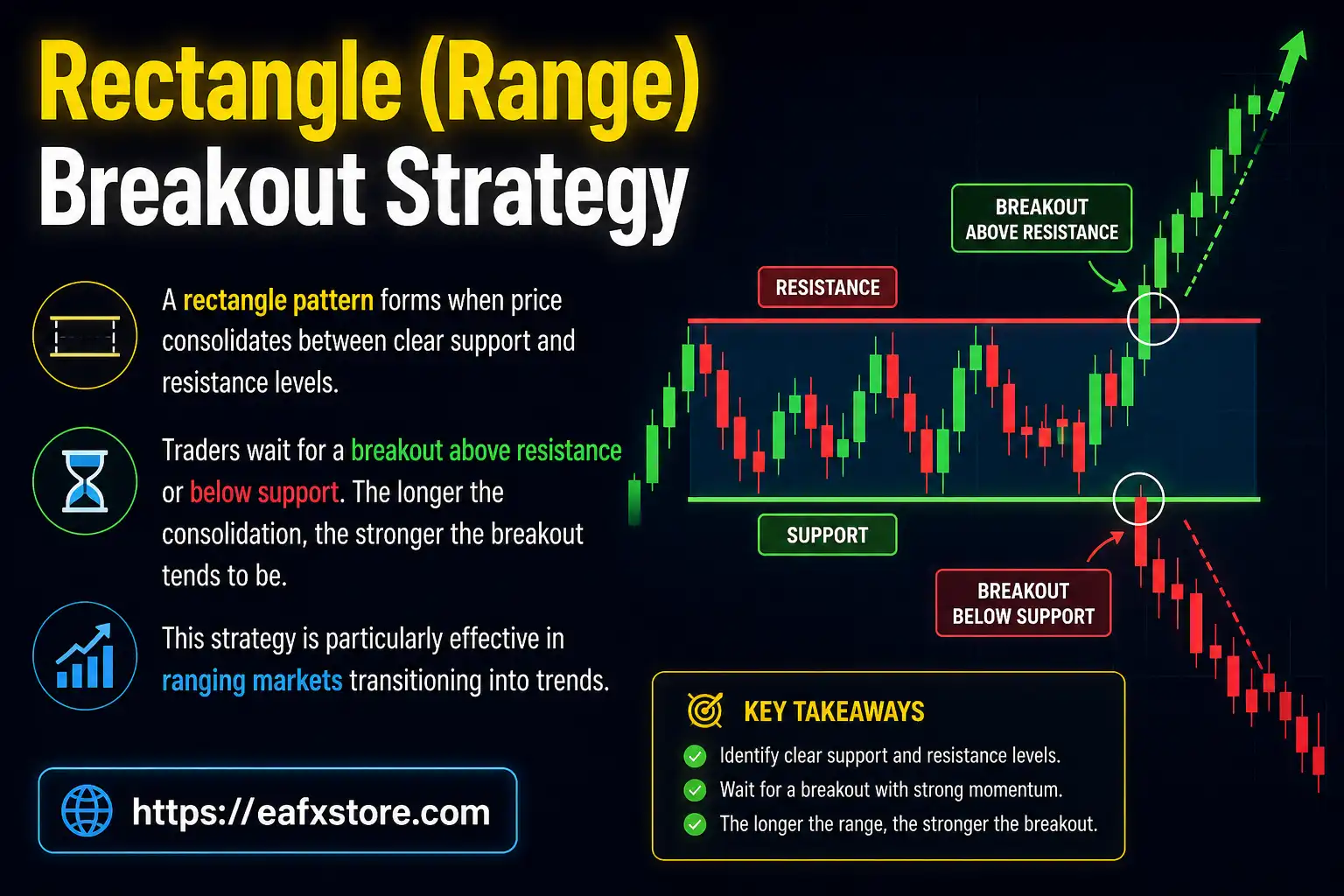
A rectangle pattern forms when price consolidates between clear support and resistance levels.
Traders wait for a breakout above resistance or below support. The longer the consolidation, the stronger the breakout tends to be. This strategy is particularly effective in ranging markets transitioning into trends.
8. Moving Average Breakout Strategy
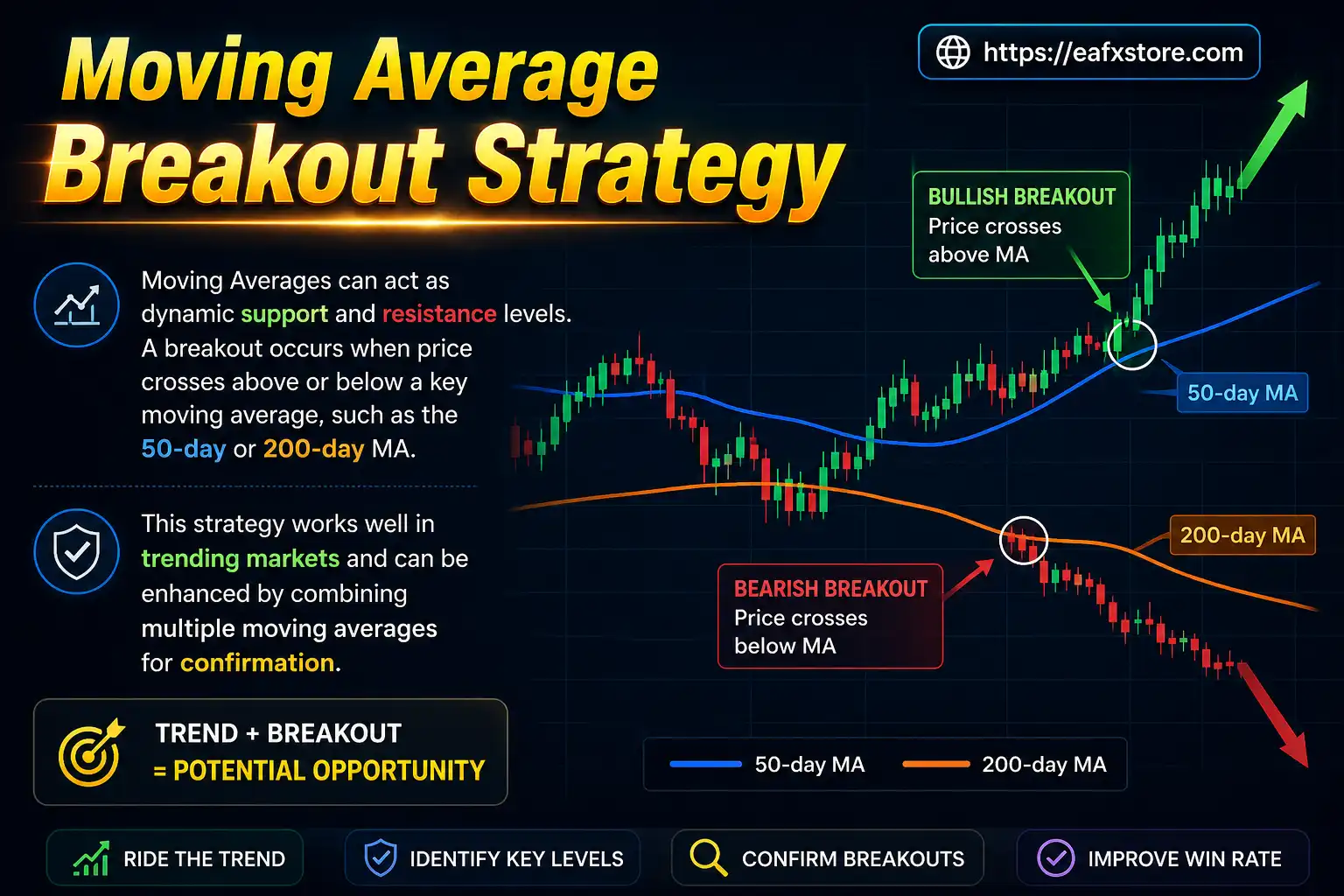
Moving Averages can act as dynamic support and resistance levels. A breakout occurs when price crosses above or below a key moving average, such as the 50-day or 200-day MA.
This strategy works well in trending markets and can be enhanced by combining multiple moving averages for confirmation.
9. False Breakout (Fade Strategy)
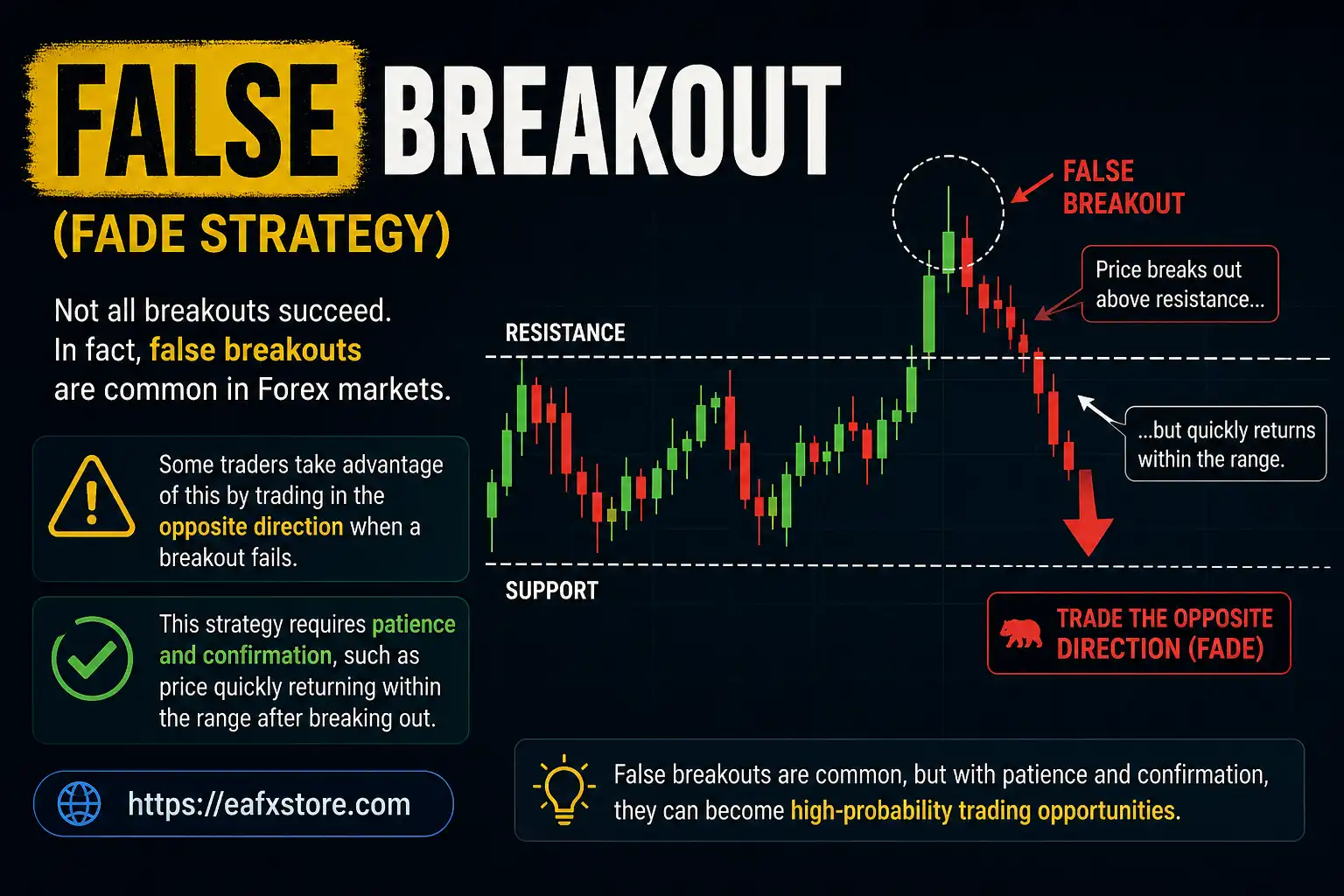
Not all breakouts succeed. In fact, false breakouts are common in Forex markets.
Some traders take advantage of this by trading in the opposite direction when a breakout fails. This strategy requires patience and confirmation, such as price quickly returning within the range after breaking out.
10. Fibonacci Breakout Strategy
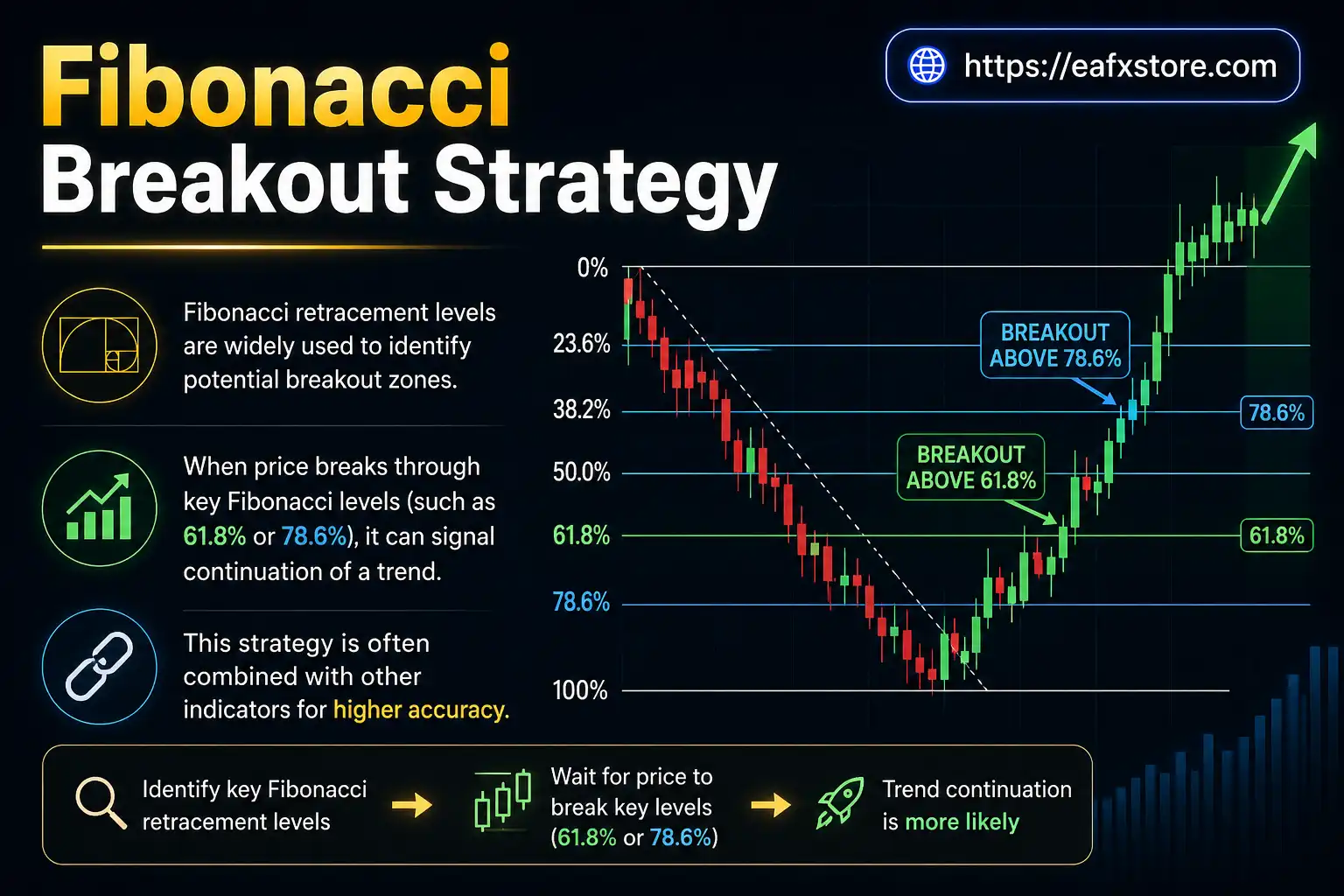
Fibonacci retracement levels are widely used to identify potential breakout zones.
When price breaks through key Fibonacci levels (such as 61.8% or 78.6%), it can signal continuation of a trend. This strategy is often combined with other indicators for higher accuracy.
Comparison of Breakout Strategies
| Strategy | Best Market Condition | Difficulty Level | Reliability |
|---|---|---|---|
| Support & Resistance | All markets | Easy | High |
| Trendline Breakout | Trending | Medium | High |
| Volume Confirmation | High liquidity | Medium | Very High |
| Asian Session Breakout | London open | Easy | High |
| News Breakout | High volatility | Hard | Medium |
| Bollinger Bands | Low volatility | Medium | High |
| Rectangle Breakout | Consolidation | Easy | High |
| Moving Average Breakout | Trending | Easy | Medium |
| False Breakout | Ranging | Hard | Medium |
| Fibonacci Breakout | Trending | Medium | High |
Tips to Improve Breakout Trading
Successful breakout trading requires more than just identifying levels. Here are a few essential tips:
- Wait for confirmation: Avoid entering trades immediately after a breakout.
- Use stop-loss orders: Protect your capital from false breakouts.
- Combine indicators: Use Volume, RSI or MACD for better accuracy.
- Avoid overtrading: Focus on high-quality setups rather than frequent trades.
- Backtest strategies: Always test your strategy before using real money.
Conclusion
Breakout trading offers powerful opportunities in Forex markets, but it requires discipline and proper strategy selection. By understanding how different breakout strategies work and when to apply them, you can significantly improve your trading results.
Whether you prefer simple support and resistance levels or more advanced methods like Fibonacci and volume analysis, the key is consistency and risk management. Master these strategies, and you’ll be better equipped to capture profitable market moves.