
What Is Trailing Take Profit (TTP)?
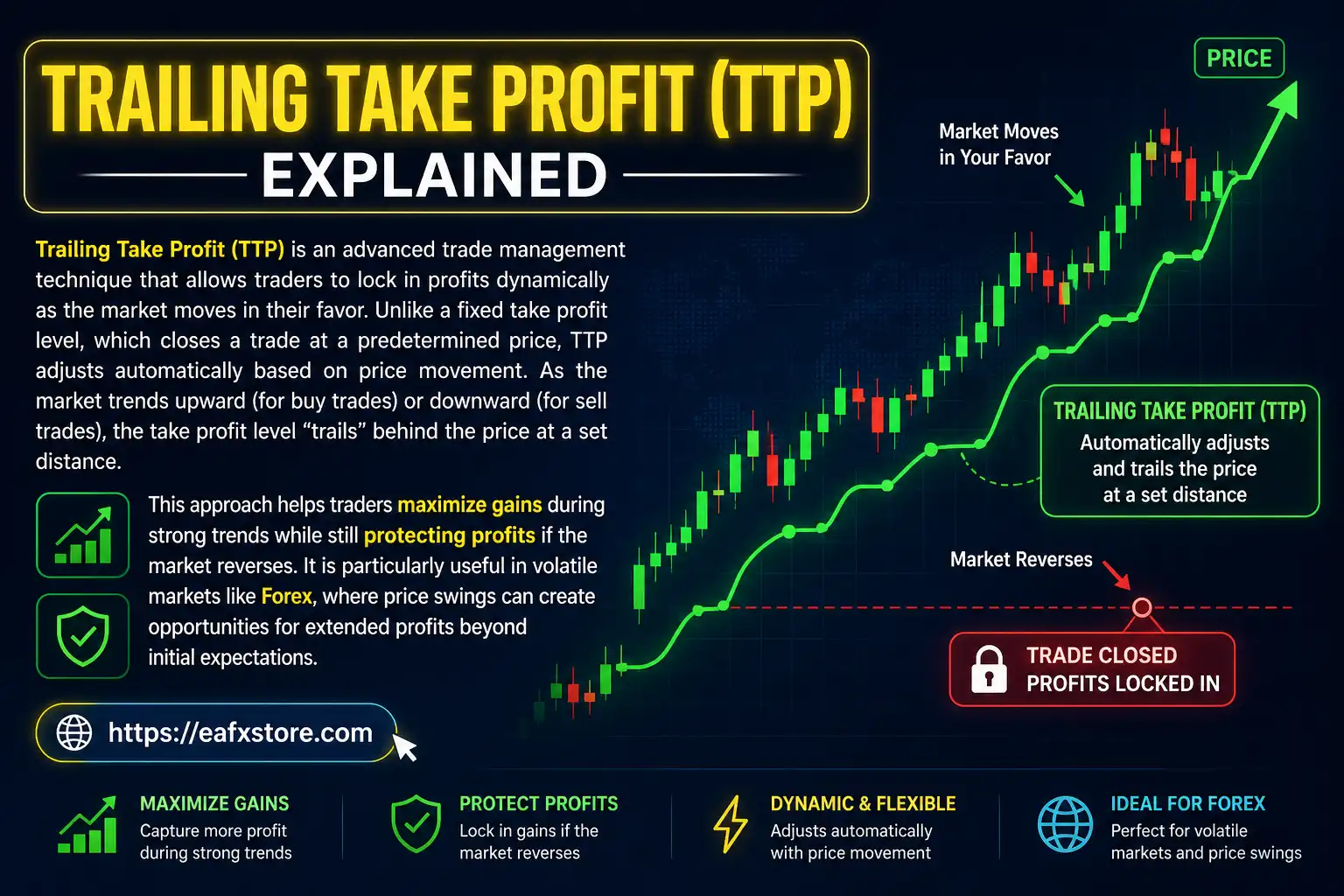
Trailing Take Profit (TTP) is an advanced trade management technique that allows traders to lock in profits dynamically as the market moves in their favor. Unlike a fixed take profit level, which closes a trade at a predetermined price, TTP adjusts automatically based on price movement. As the market trends upward (for buy trades) or downward (for sell trades), the take profit level “trails” behind the price at a set distance.
This approach helps traders maximize gains during strong trends while still protecting profits if the market reverses. It is particularly useful in volatile markets like Forex, where price swings can create opportunities for extended profits beyond initial expectations.
How Trailing Take Profit Works
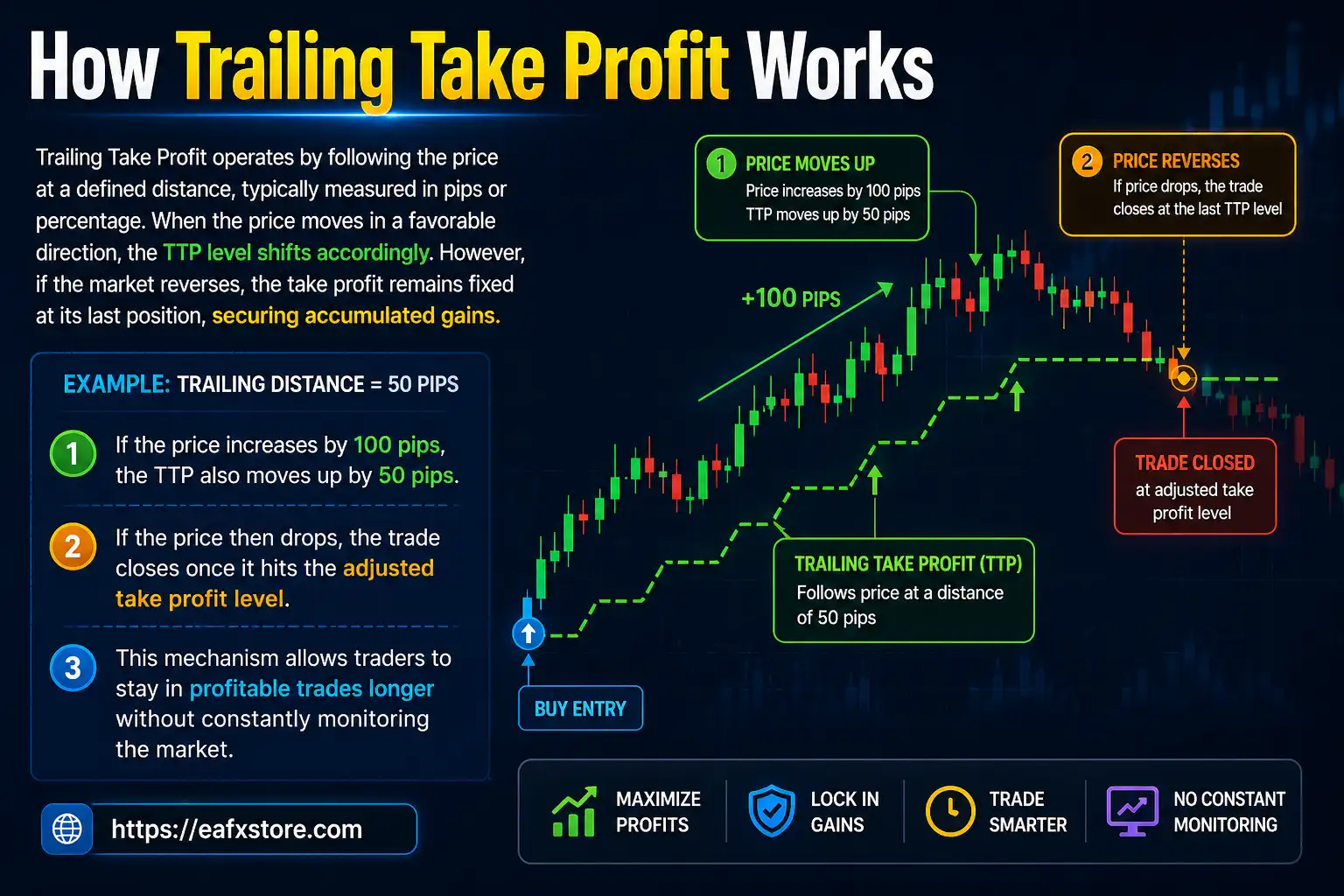
Trailing Take Profit operates by following the price at a defined distance, typically measured in pips or percentage. When the price moves in a favorable direction, the TTP level shifts accordingly. However, if the market reverses, the take profit remains fixed at its last position, securing accumulated gains.
For example, if a trader sets a trailing distance of 50 pips on a buy trade:
- If the price increases by 100 pips, the TTP also moves up by 50 pips.
- If the price then drops, the trade closes once it hits the adjusted take profit level.
This mechanism allows traders to stay in profitable trades longer without constantly monitoring the market.
Difference Between TTP and Trailing Stop Loss
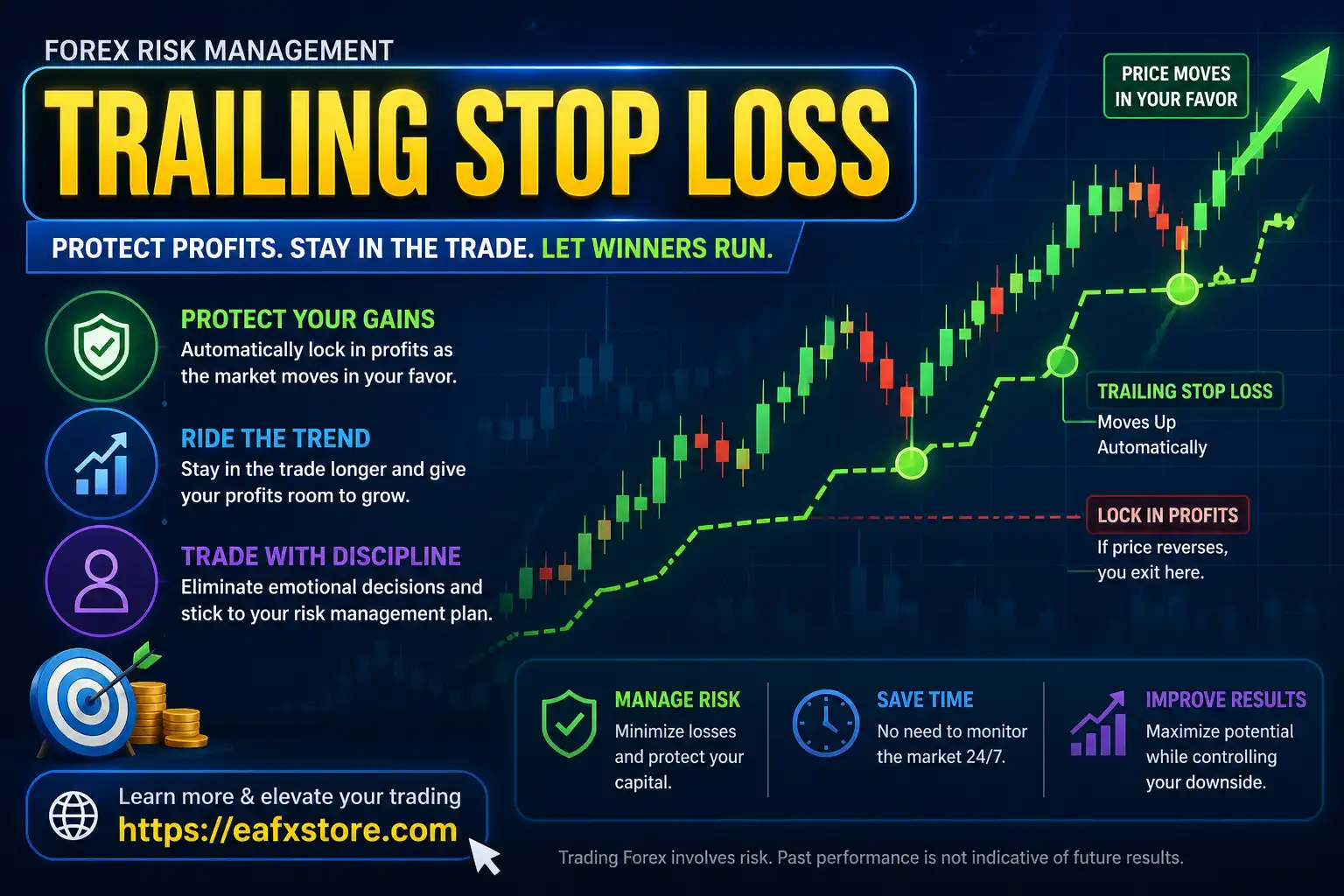
Although Trailing Take Profit and Trailing Stop Loss may seem similar, they serve different purposes in trade management. The trailing stop loss protects against losses by adjusting the stop level as price moves favorably, while TTP focuses on maximizing profits.
| Feature | Trailing Take Profit (TTP) | Trailing Stop Loss |
|---|---|---|
| Purpose | Lock in profits dynamically | Limit losses |
| Movement | Follows price upward/downward | Follows price to reduce risk |
| Trigger | Closes trade when profit retraces | Closes trade when loss threshold is hit |
| Strategy Focus | Profit optimization | Risk management |
Understanding the distinction helps traders use both tools effectively within a comprehensive trading strategy.
Benefits of Using Trailing Take Profit
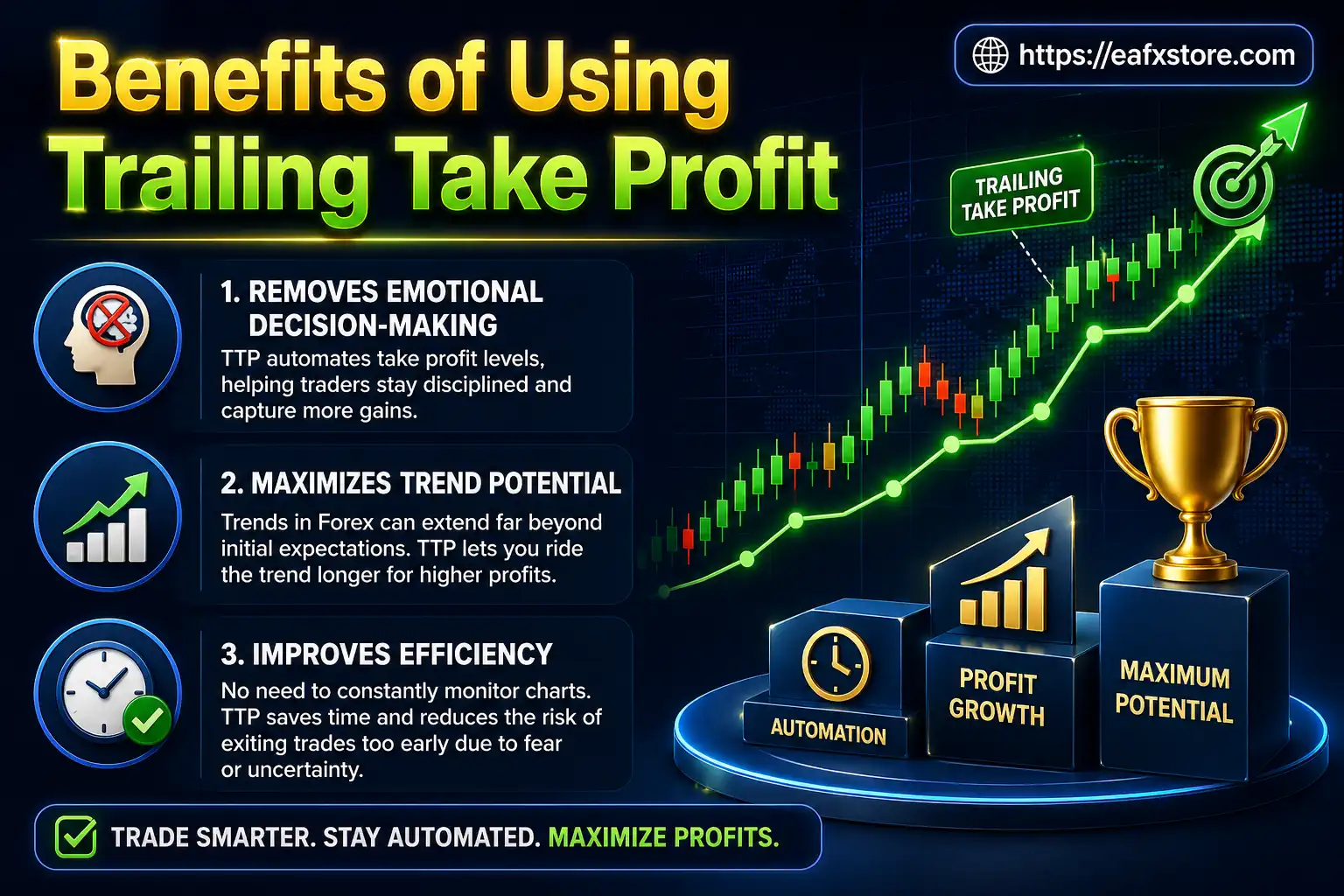
One of the biggest advantages of TTP is its ability to remove emotional decision-making from trading. Instead of manually adjusting take profit levels, traders can rely on automation to capture more gains.
Another key benefit is maximizing trend potential. In Forex markets, trends can extend far beyond initial expectations. A fixed take profit may cut profits short, while TTP allows traders to ride the trend longer.
Additionally, TTP improves efficiency. Traders do not need to constantly monitor charts, making it suitable for those who cannot watch the market all day. It also reduces the risk of exiting trades too early due to fear or uncertainty.
When Should You Use TTP?
Trailing Take Profit works best in trending markets where price moves consistently in one direction. In such conditions, TTP can capture extended price movements and significantly increase profitability.
However, in ranging or sideways markets, TTP may not perform as effectively. Frequent price reversals can trigger premature exits, limiting potential gains. Therefore, traders should combine TTP with technical analysis tools such as trendlines, moving averages or momentum indicators to identify suitable market conditions.
It is also ideal for swing traders and position traders who aim to hold trades over longer periods, as it helps them stay in trades without constant adjustments.
How to Set Up Trailing Take Profit
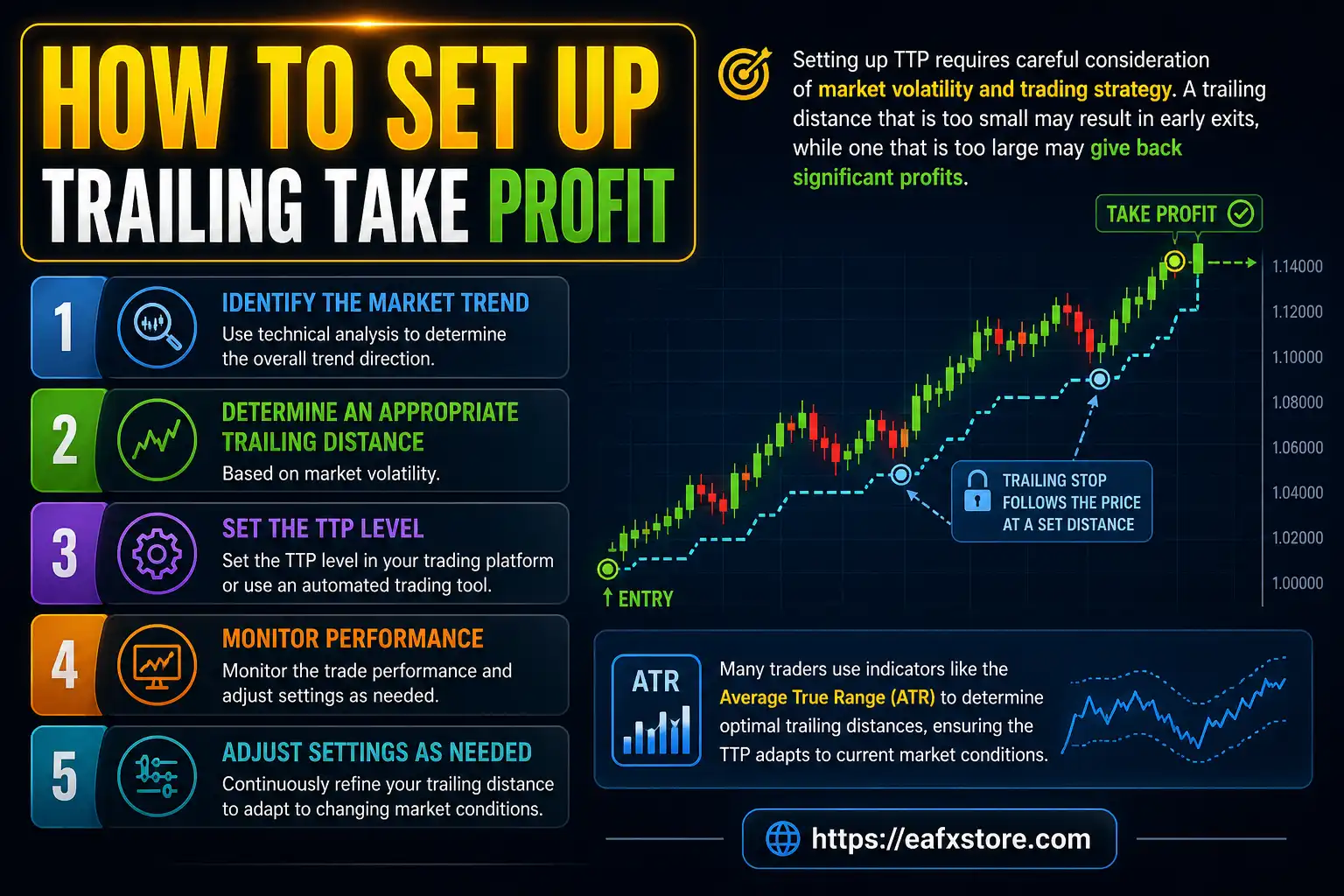
Setting up TTP requires careful consideration of market volatility and trading strategy. A trailing distance that is too small may result in early exits, while one that is too large may give back significant profits.
Here are some general steps:
- Identify the market trend using technical analysis.
- Determine an appropriate trailing distance based on volatility.
- Set the TTP level in your trading platform or use an automated trading tool.
- Monitor performance and adjust settings as needed.
Many traders use indicators like the Average True Range (ATR) to determine optimal trailing distances, ensuring the TTP adapts to current market conditions.
Common Mistakes to Avoid
One common mistake is setting the trailing distance too tight. This can cause trades to close prematurely due to normal market fluctuations. Traders should allow enough room for price movement while still protecting profits.
Another mistake is using TTP in unsuitable market conditions. As mentioned earlier, sideways markets can reduce the effectiveness of this strategy. Traders should confirm trends before applying TTP.
Over-reliance on automation is also a risk. While TTP is a powerful tool, it should not replace proper analysis and strategy planning. Combining TTP with sound risk management practices is essential for long-term success.
Example of Trailing Take Profit in Action
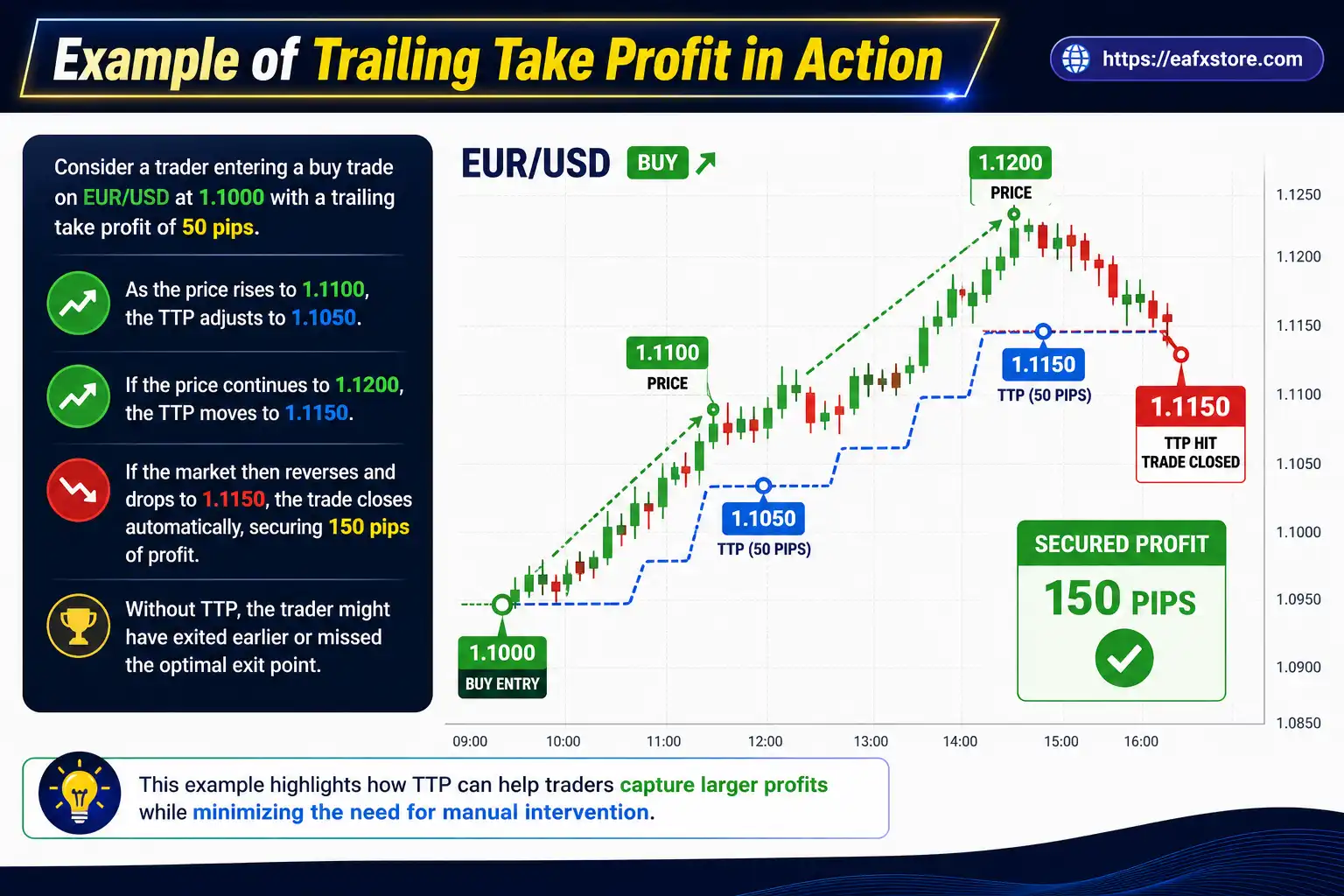
Consider a trader entering a buy trade on EUR/USD at 1.1000 with a trailing take profit of 50 pips. As the price rises to 1.1100, the TTP adjusts to 1.1050. If the price continues to 1.1200, the TTP moves to 1.1150.
If the market then reverses and drops to 1.1150, the trade closes automatically, securing 150 pips of profit. Without TTP, the trader might have exited earlier or missed the optimal exit point.
This example highlights how TTP can help traders capture larger profits while minimizing the need for manual intervention.
Is Trailing Take Profit Suitable for Beginners?
Trailing Take Profit can be beneficial for beginners, but it requires a basic understanding of market behavior. New traders should first learn fundamental concepts such as trend analysis, support and resistance and risk management before relying on TTP.
It is advisable to test TTP strategies on demo accounts before applying them in live trading. This allows traders to understand how different settings impact performance without risking real capital.
With proper practice and discipline, beginners can use TTP as a valuable tool to enhance their trading results.
Final Thoughts on TTP Strategy
Trailing Take Profit is a smart and flexible strategy that helps Forex traders maximize profits while reducing emotional decision-making. By automatically adjusting to market movements, it allows traders to capture extended trends and improve overall efficiency.
However, like any trading tool, TTP is not a guaranteed solution. Its effectiveness depends on proper setup, market conditions, and integration with a broader trading strategy. Traders who understand its strengths and limitations can use TTP to gain a significant edge in the Forex market.
Incorporating Trailing Take Profit into your trading plan can transform how you manage trades—turning good opportunities into potentially great ones when used wisely.